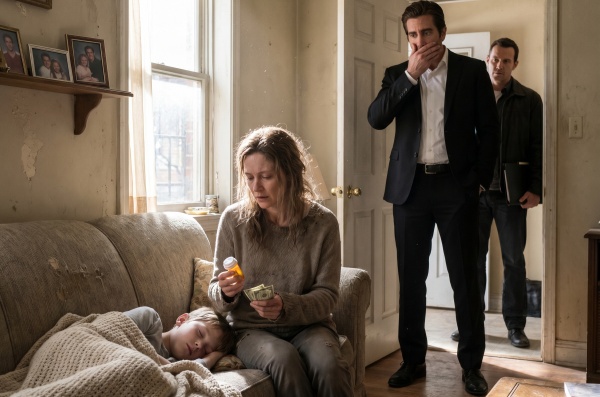
She Sold Her Phone to Buy Her Dia//betic Son’s Medi//cine. The Man Who Watched Her Do It From His Car Owned the Building Trying to Evict Her.
PART ONE: The Woman in Apartment 4C
The Bellmore Arms on Halsted Street in Chicago’s Pilsen neighborhood was not the kind of building that appeared in architecture magazines or real estate listings that used words like charming or character-rich. It was a six-story walk-up built in 1962 that smelled like radiator heat and old carpet in the winter and like the tamales from the first-floor tenant’s kitchen on Sunday mornings, which was the best smell in the building and possibly the block. The hallways were narrow. The elevator had been out of service since March. The mailboxes in the lobby had a combined total of four working locks among twelve units, which the building’s new management company — Crestline Property Holdings, LLC, which had acquired the Bellmore Arms fourteen months ago as part of a portfolio purchase — had been notified about twice and had not addressed once.
Marisol Vega had lived in apartment 4C for nine years. She had moved in when her son, Daniel, was three years old and she was twenty-four and newly single and working double shifts at the diner on 18th Street six days a week. The apartment was six hundred and forty square feet, with a window in the kitchen that looked out over the alley and a window in the bedroom that caught the western light in the afternoons in a way that made the room feel, on good days, like somewhere a person could rest. She had painted the kitchen yellow herself, with a roller she had borrowed from the building super and a color she had chosen from a sample card at the hardware store because it looked like the inside of a morning.
She had made that apartment into a home the way people with very little make homes — with intention, with the specific creativity of someone who cannot buy their way to warmth and must manufacture it from whatever is available. A rug from the thrift store on Cermak Road. A bookshelf built from boards and cinder blocks that held Daniel’s picture books on the lower shelves and her nursing textbooks on the upper ones. Drawings Daniel had made in kindergarten, framed in dollar-store frames, hung in a careful arrangement on the wall beside the door because they were the first things she wanted to see when she came home.
Daniel was twelve now. He had his mother’s dark eyes and his absent father’s height, and he had been diagnosed with Type 1 diabetes at age nine — a diagnosis that had rearranged Marisol’s life with the completeness of a natural event, the way a flood rearranges a landscape, leaving the same geography but nothing in the same place. She had studied for her nursing license with Daniel’s insulin dosing charts spread on the kitchen table beside her textbooks. She had passed her boards on the second attempt, three months after his diagnosis, sleep-deprived and determined in the way that mothers of sick children are determined — not because they have chosen extraordinary strength but because the alternative is not available to them.
She was working part-time at a pediatric clinic on Western Avenue now. Thirty hours a week — the maximum the clinic could offer without triggering the benefits threshold that their budget couldn’t sustain. It was not enough. It had not been enough for a long time, and Marisol had become, over the years, genuinely expert at managing not-enough: stretching grocery budgets with a precision that would impress a financial analyst, timing utility payments to the last possible day, knowing which pharmacies had the best discount programs and which ones would work out payment arrangements without making her feel ashamed for needing them.
The eviction notice had arrived on a Tuesday morning in November, slipped under the door while she was on her shift.
Crestline Property Holdings had been working through the Bellmore Arms systematically since the acquisition — not dramatically, not illegally on the surface, but with the methodical pressure of a company that wanted the building’s long-term tenants out so that the units could be renovated and re-leased at market rates that bore no resemblance to what the current tenants were paying. The strategy was familiar to anyone who watched what happened to working-class housing in gentrifying neighborhoods: find lease technicalities, raise rents to the legal maximum at renewal, delay maintenance requests until residents left voluntarily, and for the ones who stayed, find a provable violation.
Marisol’s violation was a subletting charge. She had allowed her cousin Elena to stay in the apartment for six weeks during a family emergency — Elena’s apartment in Logan Square had flooded in August, and Marisol had told the building office, in writing, that she had a family member staying temporarily. The building office had not responded to the notification. Crestline’s attorney had found the written notification in the file and reframed it as an unauthorized sublet, which under the lease’s technical language — language that had been updated at Marisol’s last renewal without her full understanding of the change — was grounds for termination.
The notice gave her thirty days.
Marisol had read it standing in the kitchen in her scrubs, Daniel’s breakfast dishes still on the table, the yellow walls catching the November light. She had read it twice. Then she had put it in the folder where she kept important documents — the same folder that held Daniel’s medical records, her nursing license, her lease, and the two letters from the building office confirming they had received her August notification — and she had gone to pick up Daniel from school.
She had not cried. She had decided, in the kitchen in her scrubs with the eviction notice in her hand, that crying was not available right now. There would be time for that later. Right now there were thirty days, a twelve-year-old with Type 1 diabetes, and a folder full of documentation that an attorney might be able to do something with — if she could find an attorney she could afford.
PART TWO: The Phone
The man who owned the building — or rather, the man who owned the LLC that owned the company that had acquired the portfolio that included the Bellmore Arms — was named Vincent Caruso. He was fifty-one years old, operated out of an office in River North, and was, depending on who in Chicago you asked, either a successful commercial real estate developer with aggressive acquisition strategies or something considerably more layered than that. The city had opinions about Vincent Caruso. It had been having those opinions for twenty-three years, in varying registers and with varying specificity, and Vincent had spent those twenty-three years operating with the particular confidence of a man whose attorneys were very good and whose accountants were better.
He had not personally ordered the eviction of apartment 4C. He had not personally ordered any of the evictions at the Bellmore Arms. He had set a policy, hired a management company, and allowed the management company to execute the policy, which is the particular architecture of deniability that experienced operators build into their business structures. He knew what was happening at the Bellmore Arms the way he knew what was happening at all fourteen properties in his Chicago portfolio — in aggregate, in the form of occupancy reports and revenue projections and vacancy timelines, not in the form of individual women in yellow kitchens reading notices in their scrubs.
He had been driving past the Bellmore Arms on a Tuesday morning in early December — not because he made a habit of driving past his properties personally, but because his usual route to a meeting in Bridgeport had been blocked by a water main repair on 18th Street and he had taken Halsted as an alternative. He had been stopped at the light at the corner of Halsted and 21st when he looked out the passenger window and saw a woman standing on the sidewalk outside a pawn shop, talking to the man behind the glass-and-grate exterior window.
He watched because he was stopped at a light and had nothing else to look at, and because there was something in the woman’s posture — straight, composed, slightly too still — that caught his attention the way certain postures do when you have spent a lifetime reading people.
She was holding a phone. Not looking at it — holding it in both hands, looking at the man behind the window, saying something he couldn’t hear from the car. The man behind the window examined the phone. He said something. She nodded. She handed him the phone through the window slot. He counted bills. She took the bills, folded them once, and put them in the pocket of her scrubs with the careful deliberateness of someone handling something they cannot afford to lose.
She did not look happy. She did not look destroyed. She looked like a woman who had made a calculation and completed it, and was now going to do the next thing.
The light changed. Vincent did not move. The car behind him tapped its horn once, briefly, after a few seconds. He pulled to the side of the road and watched in the mirror as Marisol Vega walked back toward the Bellmore Arms with her hands in her pockets and her chin level.
He sat in the car for a moment. Then he called his assistant. “Pull the tenant file for the Bellmore Arms evictions,” he said. “All of them. I want them on my desk before noon.”
Later, Vincent would not be able to explain what had stopped him at that particular light on that particular morning. He had driven past distress his entire career — it was the nature of the business he was in, and he had long ago developed the professional separation that allowed him to see the aggregate without seeing the individual. He had been good at this for twenty years. He had been, he would acknowledge to the one person he ever admitted such things to — his older sister Rosa, who ran a legal aid nonprofit in Wicker Park and who had been asking him hard questions about his business practices for a decade — good at not looking at the individual.
But he had looked at the individual. He had watched a woman sell her phone on a Tuesday morning with the composure of someone who had stopped being surprised by how hard things could get, and something in him had shifted in a way he was not yet ready to name.
He read the tenant files that afternoon. All twelve eviction cases at the Bellmore Arms. He read them slowly, with the attention he usually reserved for acquisition due diligence, and what he found in Marisol Vega’s file — the August notification letter, the building office’s non-response, Crestline’s reframing of a properly disclosed family emergency as an unauthorized sublet — did not read, to someone who had spent twenty-three years working with attorneys, as clean.
He sat with the file for a long time.
Then he called the one person he knew who would tell him the truth about what he was looking at without softening it for his benefit.
PART THREE: Rosa Makes the Call
Rosa Caruso was fifty-four years old and had spent thirty years doing the legal work that her brother’s business model made necessary — not for Vincent, but for the people affected by Vincent, which she had accepted as the particular bargain of loving someone whose choices you have opposed for two decades without being able to change. She ran the Pilsen Legal Aid Clinic out of a storefront on 18th Street, four blocks from the Bellmore Arms, and she had seen the Crestline eviction notices coming through her office for fourteen months. She had handled three of them already. She knew the pattern.
When Vincent called and described what was in the file, she listened without interrupting. When he finished, there was a silence of approximately five seconds, which was Rosa’s standard processing interval for information that required her to recalibrate something.
“You know what this is,” she said. It was not a question.
“I know what the attorney told me it was,” Vincent said.
“Your attorney told you what you paid him to tell you.” A pause. “Vincent. This woman has a sick kid, she has documentation that she followed protocol, and your management company is using a lease amendment she didn’t understand to put her on the street in December.”
He was quiet.
“The phone,” he said after a moment. “She sold her phone this morning. I was at the light.”
Another silence. Longer this time.
“I’ll call her,” Rosa said. “Give me the file.”
Rosa reached Marisol that evening through the clinic’s intake line, which Marisol had actually already called — she had found the number on a flyer at the pediatric clinic where she worked, placed there by a social worker who had the particular habit of leaving resources in places where people who needed them might find them without having to ask. They spoke for forty minutes. Marisol walked Rosa through the documentation in her folder with the organized precision of a woman who had been managing complexity for a long time and had learned to keep her records complete. Rosa asked the same three questions she always asked: Do you have the original notification letter? Do you have proof it was received? Did they respond in writing at any point?
Yes. Yes. No.
“The non-response is the key,” Rosa said. “They received notification, took no action, and then used the notification against you. That’s not a clean subletting violation. That’s a constructive waiver argument, and I’ve made it successfully twice in the last eight months in Mecklenburg County.”
“Cook County,” Marisol said quietly, correcting her with the gentle precision of someone who noticed details.
“Cook County,” Rosa agreed. “Yes. Sorry. Long day.”
She told Marisol not to respond to any further communications from Crestline’s attorney without going through her first. She told her the clinic would take the case at no cost. She told her the eviction hearing was in three weeks, which was tight but manageable if they moved quickly.
She did not tell Marisol that her brother owned the company.
That conversation, Rosa had decided, needed to happen separately.
PART FOUR: The Eviction Hearing
The eviction hearing was scheduled for a Thursday morning at the Richard J. Daley Center on Washington Street, in one of the courtrooms on the fifth floor that handled landlord-tenant cases with the steady, efficient rhythm of a docket that moved through a hundred cases a week. The room had the institutional calm of a space that has processed an enormous amount of human distress and has become, by necessity, indifferent to the texture of any individual case.
Crestline’s attorney was a man named Bradley Fitch, from a Loop firm that specialized in commercial real estate litigation and charged $450 an hour and had been handling Crestline’s eviction portfolio for fourteen months with a win rate that his firm listed prominently on their website. He arrived with a paralegal and a three-ring binder and the polished confidence of someone who had stood in this room many times and expected to stand in it many more.
Rosa arrived with Marisol, a legal pad, and a folder.
The folder contained: the original August notification letter, the certified mail receipt showing the building office had signed for it, a printed copy of the building office’s complete failure to respond in writing over the subsequent three months, the lease amendment that contained the subletting language, a legal brief arguing constructive waiver under Illinois landlord-tenant law, and a secondary argument regarding Crestline’s pattern of eviction filings at the Bellmore Arms — seven in fourteen months — as evidence of a bad faith effort to clear the building of long-term tenants in advance of planned renovations.
The judge was the Honorable Patricia Ngai, who had been on the Cook County bench for eleven years and who read the briefs submitted the previous week with the focused attention of someone who did not need to perform impartiality because she simply was impartial. She had questions about the constructive waiver argument. Rosa answered them clearly. She had questions about the notification letter’s timing. Marisol answered them directly, in the flat, factual delivery of a woman who had testified to nothing but the truth because the truth was, in this case, entirely on her side.
Bradley Fitch made his arguments competently. He was a good attorney. Rosa was a better one, and she had a stronger case.
Judge Ngai took a twenty-minute recess. When she returned, she ruled from the bench.
The eviction was dismissed. The constructive waiver argument was sustained. The court found that Crestline Property Holdings’ failure to respond to the tenant’s written notification constituted a waiver of the subletting clause in the specific instance documented. The ruling was entered into the record. Bradley Fitch closed his binder with the contained expression of a man who had lost a case he had expected to win and was already calculating the next move.
Marisol sat very still for a moment after the ruling. Then she turned to Rosa and said, simply, “Thank you.”
Rosa squeezed her hand. “You did the hard part,” she said. “You kept the documentation.”
What Marisol did not know, sitting in courtroom 506 of the Daley Center with the ruling still settling into reality, was that in a coffee shop two blocks away on Dearborn Street, Vincent Caruso was sitting with his phone face-down on the table, waiting for a call that would tell him what had happened. When Rosa called and said the two words — “It’s dismissed” — he sat quietly for a long moment, then thanked her and hung up.
He sat in the coffee shop for another twenty minutes. He watched the people walking past the window on Dearborn — the Loop foot traffic of a Thursday morning, ordinary and relentless. He thought about a woman selling her phone at a pawn shop on Halsted Street with her hands in her scrubs pockets and her chin level. He thought about a folder full of documentation that a woman had built over three months of managing not-enough, the same way she managed everything — with precision, with the specific competence of someone who cannot afford to be careless.
He called his general counsel. He said four things: that he wanted a full audit of all active eviction proceedings across the Crestline portfolio, that he wanted the Bellmore Arms lease renewal process reviewed by outside counsel, that he wanted the building office’s non-response protocol documented and corrected, and that he wanted the Bellmore Arms maintenance backlog — the four mailbox locks, the elevator, the two outstanding HVAC tickets on floors three and five — addressed within thirty days.
His general counsel asked whether this was in response to the court ruling.
“It’s in response to something I should have looked at a long time ago,” Vincent said.
He hung up. He paid for his coffee. He walked back to his office on Wacker Drive in the cold December air.
PART FIVE: December
The elevator at the Bellmore Arms was repaired on December 18th, which was a Tuesday, by a maintenance crew that arrived with the proper parts and the proper permits and completed the job in four hours. The building super, a man named Jorge who had been with the building for eleven years and had been submitting repair requests to the new management company since January without response, watched the crew work with an expression that suggested he was reserving judgment on whether this represented a permanent change or a temporary one.
The mailbox locks were replaced the same week. The HVAC tickets on floors three and five were closed by the end of the month.
Marisol did not know the connection between these repairs and the man who had sat at a red light on Halsted Street watching her walk away from a pawn shop window. She knew the repairs had happened. She noticed them with the specific gratitude of someone who had been asking for them, in building maintenance request forms, for over a year. She filed the information under “things that are better now” and continued managing the things that were not yet better, because that is what people do when their lives are a balance sheet of ongoing challenges — they update the ledger and keep moving.
Rosa had told her, three weeks after the hearing, that the clinic’s representation in the case had come about partly through a referral from a private donor who had an interest in the Pilsen neighborhood. She had not said more than that. Marisol had asked no follow-up questions, because Marisol was a woman who understood when not to pull a thread — who understood that sometimes the right thing happens through a chain of connection that it is better not to examine too closely, and that the appropriate response is gratitude for the outcome, not investigation of the mechanism.
Daniel got a new continuous glucose monitor for Christmas. Not from Marisol — she could not have afforded it that month, not after the eviction proceedings and the November pharmacy bills that had stretched the budget to its outermost edge. It arrived in a small package on December 23rd, addressed to Daniel Vega, with a card that said only: “For a kid who’s tough enough to handle whatever comes. — A friend of the building.” The device was a Dexcom G7, the current standard of care for pediatric Type 1 management, and it would allow Daniel to monitor his glucose levels continuously without the finger-stick tests that he had been doing eight to twelve times a day since his diagnosis.
Marisol had sat at the kitchen table with the package for a long time before she opened it. Then she had opened it, read the card, looked at the device, and done the one thing she had been saving for when she had earned it — she let herself cry. Not because she was broken. Because she was not, and because the relief of not being broken after a long time of holding yourself together has to go somewhere, and tears are the most honest direction.
Daniel came into the kitchen and found her at the table with the device in her hands. He was twelve years old and perceptive in the way that children of single parents who work hard often are — attuned to adult emotional weather in a way that is born of paying close attention for a long time. He sat down beside her and put his hand over hers without saying anything, which was, Marisol thought, the most adult thing a twelve-year-old had ever done in her presence.
“Good tears or bad tears?” he asked.
“Good,” she said. “The best.”
He leaned against her shoulder. She let him. Outside, the alley window showed the December gray of a Chicago winter afternoon, the bare branches of the tree behind the building dark against the low sky, and the yellow kitchen walls caught what light there was and held it.
Vincent Caruso and Rosa Caruso had dinner on Christmas Eve, as they did every year, at their mother’s house in Elmwood Park. Their mother, Lucia, was seventy-nine years old and cooked a feast that had not changed in forty years and that both of them understood was the anchor of everything — the thing that made the rest of the year make sense. They ate and talked and argued about sports and avoided, for most of the evening, the subjects that they usually avoided.
Near the end of the night, after their mother had gone to bed and they were washing dishes in the kitchen, Rosa said, without turning from the sink: “The woman in 4C is doing well.”
Vincent dried a plate. “Good,” he said.
“The boy got his monitor.”
He said nothing.
“Vincent.” Rosa turned and looked at her brother with the specific expression she reserved for moments when she needed him to understand something she was not going to say in full. “You’re not done.”
He set the plate down on the stack. “I know.”
“The audit is a start. The repairs are a start.” She turned back to the sink. “But the building is full of people like her. People who’ve been there for years, who’ve been managing not-enough for years, and who are one lease amendment away from a Tuesday morning at a pawn shop.”
He was quiet for a long time.
“What do you need?” he said finally.
Rosa smiled, very briefly, with her back to him. It was the same question their mother had always asked, and she recognized it.
“Tenant protections written into the standard lease,” she said. “A maintenance response timeline with penalties for non-compliance. A direct line between tenants and the owner — not the management company, the owner — for disputes that the management company has a conflict of interest in resolving.” She handed him a wet plate. “And about six months of pro bono capacity from your general counsel’s office to help me work through the backlog at the clinic.”
He took the plate. He dried it. He put it on the stack.
“I’ll call you in January,” he said.
“I know you will,” Rosa said. “Because you’re still my brother, even when you make it hard.”
Marisol went back to work on December 26th, the morning shift at the pediatric clinic on Western Avenue. She came home at four in the afternoon to an apartment that was warm and lit and exactly as she had left it — the yellow kitchen, the bookshelf with the picture books and the nursing textbooks, the drawings in the dollar-store frames beside the door. Daniel was at the kitchen table doing homework, his new Dexcom showing a green trend line on the app on her phone when she checked it: steady, in range, exactly where it should be.
She hung up her coat. She washed her hands. She started making dinner — nothing complicated, just rice and beans and the roasted chicken thighs that Daniel had requested, the chicken she seasoned the way her grandmother had taught her with the spices that had no translation in English but that meant home in the language she had grown up in.
She thought, briefly, about the eviction notice that had arrived in November, the thirty days that had felt like a wall, the folder she had kept with the documentation that Rosa had called the hard part. She thought about the phone she had sold, the bills in the pocket of her scrubs, the calculation she had made on a Tuesday morning on Halsted Street with her chin level.
She thought: I am still here.
Not triumphantly. Not dramatically. Just as a fact, the same way you note the weather or the time — as information about the world that you need to know in order to proceed.
She was still here. Her son was at the table with his homework and a glucose monitor showing green. The kitchen was yellow and the chicken was in the pan and the Chicago winter was pressing cold against the windows, and she had thirty-two dollars in her checking account and a nursing shift on Friday and a lease that was, for now, secure.
It was enough. It was not everything. It was enough.
She stirred the rice and watched the window and let the kitchen fill with warmth, the way it always did, the way she had always made it do.
