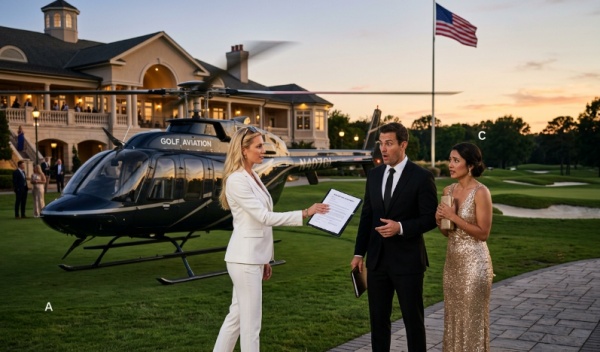
My Husband Banned Me From His Country Club. hey Called Me “Unsuitable” at the Country Club. My Husband thought humiliating his wife in front of the Evergreen Hills elite would prove I never belonged in his world. With his mother watching and his mistress smiling, he helped suspend I’s club privileges and called it “protecting tradition.” But, The Next Morning…
Part 1: The Word That Ended My Marriage
The first time my husband called me “unsuitable,” he did it in front of his mother, his mistress, and three hundred members of the Evergreen Hills Country Club.
He did not whisper it.
He did not say it in anger behind a closed door, where ugly truths usually feel safe enough to crawl out.
He said it into a microphone.
Under a white tent.
Beside the eighteenth green.
With a flute of champagne in his hand and a smile on his face.
My name is Hannah Whitmore. I was thirty-eight years old, born in Queens, raised by a single mother who cleaned offices at night and sold tamales on weekends until her hands cracked from dish soap and cold weather. I was not the kind of woman Evergreen Hills had been built to welcome.
At least, that was what they thought.
Evergreen Hills Country Club sat on two hundred acres in Fairfield County, Connecticut, where the grass was cut like velvet and the members used words like “legacy” when they meant “keeping people out.” The clubhouse had white columns, dark green shutters, brass fixtures, and oil paintings of men who looked like they had never once loaded their own dishwasher.
My husband, Preston Whitmore III, belonged there by birth.
His grandfather had been one of the early members. His father had served on the board twice. His mother, Caroline Whitmore, treated the club like an extension of her living room, except with more staff and fewer people she considered equal.
I married into that world seven years earlier.
At first, I tried.
I learned which fork to use at luncheons where no one ate enough to justify the silverware. I memorized names of wives who smiled with their mouths and inspected me with their eyes. I paid attention when Caroline corrected my pronunciation of “Greenwich” even though I had lived in New York long enough to know exactly how people said it.
Preston called it “adjusting.”
I called it disappearing politely.
He had loved my differences when we met.
Back then, I was Hannah Rivera, a financial restructuring attorney working eighty-hour weeks in Manhattan. Preston was charming, handsome, and newly promoted at a private equity firm where men wore quarter-zips over dress shirts and called greed “strategy.”
He said he loved that I was direct.
He said he loved that I had built myself from nothing.
He said his family needed “someone real.”
Then he married me and spent seven years sanding down every real thing about me.
“Don’t mention your mother’s cleaning jobs at dinner,” he said once before a fundraiser. “People won’t know how to respond.”
“Maybe don’t wear red to the club,” he said another time. “It draws attention.”
“Could you soften your tone with Mother?” he asked after Caroline referred to my family as “colorful.”
I softened.
Then I softened again.
Until one day, I looked in the mirror before a country club charity luncheon and barely recognized the woman wearing pearls.
The event where Preston called me unsuitable was supposed to be the annual Evergreen Hills Children’s Hospital Benefit. I had helped organize it for months. Not because I cared about impressing the club, but because the hospital had treated my nephew after a terrible asthma attack, and I believed the money mattered more than the people raising it.
I secured two major corporate donors.
I negotiated the catering contract.
I convinced a Broadway actor I once represented in a pro bono contract dispute to perform for free.
But Caroline chaired the committee, so naturally, everyone praised her.
That afternoon, the club glittered with wealth pretending to be compassion. White hydrangeas lined the tables. Women in pastel dresses air-kissed beneath the tent. Men discussed golf handicaps, municipal bonds, and which boarding schools were “still worth it.”
Preston stood beside me in a navy suit, looking exactly like the kind of man country clubs are invented to protect.
“You look tense,” he said.
“I’m fine.”
“You always say that when you’re about to make things uncomfortable.”
I looked at him. “By things, do you mean people?”
He sighed. “Hannah.”
There it was.
The warning tone.
The sound of a husband reminding his wife not to embarrass him by existing too loudly.
Before I could answer, Caroline approached with a woman in a cream dress.
Blair Ashford.
Twenty-nine years old.
Blonde, delicate, and expensive in the way some women seem assembled by lifestyle magazines. She worked in “philanthropic partnerships,” which appeared to mean attending events, posting photos, and touching Preston’s arm whenever she laughed.
I had suspected the affair for three months.
The late meetings.
The sudden interest in “committee logistics.”
The hotel charge in Boston on a night Preston claimed he stayed at his office.
But suspicion is not the same as evidence, and I had spent my career telling clients never to act before the documents arrived.
So I waited.
Blair smiled at me. “Hannah, the tent looks beautiful.”
“Thank you,” I said. “The florist did a wonderful job.”
Caroline’s eyes flicked over my dress. “How practical of you to wear navy. Very safe.”
I smiled. “I try not to frighten the hydrangeas.”
Blair laughed.
Caroline did not.
Preston’s hand tightened around his glass.
The luncheon began at two. Speeches followed at three. The hospital director spoke movingly. A father shared how the pediatric ICU saved his daughter’s life. People dabbed their eyes with linen napkins and wrote checks large enough to make compassion tax-deductible.
Then Preston took the stage.
He had not been scheduled to speak.
That was my first warning.
Caroline sat straighter.
Blair looked down at her lap, smiling slightly.
Preston tapped the microphone.
“Good afternoon, everyone. I know I’m not on the program, but I hope you’ll indulge me for a moment.”
The crowd chuckled warmly.
They always indulged Preston.
He thanked the committee, the donors, the staff, his mother, and Evergreen Hills for its “unmatched tradition of service.” He did not thank me.
Then his voice changed.
“As many of you know, Evergreen Hills is more than a club. It is a community built on shared values, discretion, and standards.”
The word standards moved through the tent like perfume.
I felt my stomach tighten.
Preston continued.
“Recently, there have been concerns about whether certain members and spouses truly reflect the culture we’ve protected for generations.”
A few heads turned toward me.
Not many.
Enough.
I looked at Caroline.
She was staring straight ahead.
Blair would not meet my eyes.
Preston smiled sadly, as if he were about to make a noble sacrifice.
“My wife, Hannah, has many admirable qualities. She is ambitious, intelligent, and undeniably accomplished. But accomplishment alone does not make someone suitable for every environment.”
The tent went silent.
My skin went cold.
Preston looked down at me.
“With respect to this club, its traditions, and its members, I believe it is time we acknowledge that Hannah has never been a natural fit here.”
A woman near the front gasped softly.
Someone whispered my name.
Preston kept going.
“This morning, the membership committee voted to suspend Hannah’s spouse privileges pending formal review.”
My ears rang.
Spouse privileges.
Suspended.
At the club where I had raised half the money for the event taking place under that tent.
The club where his mistress stood three feet from his mother, pretending not to smile.
Preston lowered the microphone.
And then he said the word again, softer but still audible.
“Unsuitable.”
For a moment, I felt every version of myself watching.
The girl from Queens translating bills for her mother.
The law student eating instant noodles in a library basement.
The young attorney fighting not to cry in rooms full of men who called her “aggressive” before stealing her arguments.
The wife who had swallowed insult after insult to keep peace with people who would never consider her peaceful.
I stood.
Every eye followed me.
Preston’s smile faltered.
He expected tears.
Maybe a scene.
Maybe me storming out so they could call me emotional later.
Instead, I picked up my handbag, turned to Caroline, and said, “Thank you for clarifying the standards.”
Then I looked at Blair.
“Good luck meeting them.”
I walked out of Evergreen Hills without raising my voice.
Behind me, the tent stayed silent.
By sunset, the email arrived.
Notice of Suspension of Spouse Privileges — Evergreen Hills Country Club
Effective immediately.
Pending review.
Concerns regarding decorum.
Cultural compatibility.
Member complaints.
I read it twice.
Then I forwarded it to my attorney.
Not my divorce attorney.
My acquisitions counsel.
Because what Preston and his mother did not know was that Evergreen Hills had been drowning in debt for years.
And at 9 a.m. the next morning, the note came due.
Part 2: The Club No One Really Owned
Country clubs look permanent from the outside.
That is part of the trick.
The brick gates, the old trees, the plaques with founding dates, the portraits of dead chairmen in the dining room — all of it whispers stability. It tells members they are not merely paying annual dues; they are participating in history.
But history still has a balance sheet.
And Evergreen Hills had a terrible one.
I knew because three months earlier, one of my firm’s private clients asked me to quietly review a distressed asset portfolio held by a regional bank in New Jersey. The portfolio included commercial notes tied to restaurants, marinas, boutique hotels, and one very familiar Connecticut country club.
Evergreen Hills.
The club’s land was valuable, but its operations were weak. Membership had declined. Younger families did not want to pay six-figure initiation fees to be judged by widows named Bunny and men who still thought women’s tennis was a social program. The clubhouse needed $12 million in deferred maintenance. The golf course irrigation system was older than some members’ marriages.
Worse, the club had borrowed aggressively to renovate its ballroom five years earlier.
The renovation went over budget.
Then the wedding business slowed.
Then a lawsuit over an injured employee settled quietly but expensively.
Then the bank lost patience.
Evergreen Hills survived on reputation, denial, and debt extensions.
A dangerous combination.
When I first saw the file, I almost laughed.
Preston’s holy temple of legacy was being held together by bridge loans, unpaid vendor invoices, and board minutes written in the language of panic.
My client considered buying the debt at a discount.
I advised them it was messy, politically delicate, and potentially profitable if handled correctly.
They passed.
I did not.
Not immediately.
That would have been impulsive.
But I created a company, HBR Capital, and began watching the note.
Quietly.
Legally.
Through counsel.
The bank wanted out.
The club needed restructuring.
And I, apparently, was unsuitable.
The morning after Preston humiliated me, I woke at 5:12 a.m.
I had not slept.
Our house in Darien was silent except for the hum of the refrigerator and the faint ticking of the antique clock Caroline gave us as a wedding gift. Preston had not come home. He texted at midnight.
Staying at the club. We should both cool down.
By “the club,” he meant Blair’s guest cottage two miles from the course.
I did not reply.
Instead, I made coffee, opened my laptop, and joined a video call with my acquisitions counsel, two financing partners, and the bank’s representative.
At 8:57 a.m., the documents were ready.
At 9:00 a.m., HBR Capital purchased the distressed debt secured by Evergreen Hills Country Club’s assets.
Not the club outright.
Not yet.
Real life is not a cartoon where someone points at a building and says, “I’ll take it.”
But owning the senior secured debt meant controlling the conversation. It meant the club’s board could no longer beg a friendly banker for another quiet extension. It meant any restructuring, refinancing, or foreclosure alternative now ran through me.
By 9:14, my counsel sent formal notice.
By 9:26, Evergreen Hills’ board chair called me.
I let it go to voicemail.
By 9:31, Preston called.
I watched his name flash on my phone.
Then I let that go to voicemail too.
At 9:42, Caroline called.
I answered that one.
“Hannah,” she said, her voice tight. “There seems to be some confusion.”
“Good morning, Caroline.”
“Did you purchase the club’s loan?”
“No,” I said. “My company did.”
Silence.
Then, colder, “Why would you do that?”
“Investment opportunity.”
“This is not amusing.”
“I agree. Debt restructuring is rarely funny.”
“Hannah.”
There it was again.
That tone.
The one she used when reminding me I had entered her world by marriage and could be removed by manners.
I took a sip of coffee.
“Caroline, yesterday I was publicly described as unsuitable for Evergreen Hills. Today, Evergreen Hills is financially accountable to a company I control. I imagine the membership committee will want to update its understanding of fit.”
She inhaled sharply.
“You planned this.”
“No. You accelerated it.”
She hung up.
I smiled for the first time in twenty-four hours.
Not because I was happy.
Because facts had entered the room.
By noon, the board requested an emergency meeting.
I agreed to attend at 4 p.m. via counsel, then changed my mind.
No.
They had humiliated me in person.
They could learn in person.
I arrived at Evergreen Hills at 3:55 p.m. wearing a cream pantsuit, gold hoops, and no wedding ring.
The same security guard who had awkwardly refused me entry that morning after my suspension email now stood at the gate looking like he wanted to dissolve into the asphalt.
“Mrs. Whitmore,” he said.
“Ms. Rivera,” I corrected.
He swallowed.
“Yes, ma’am. They’re expecting you.”
“I know.”
The clubhouse looked different when I walked in as a creditor rather than a wife.
Smaller, somehow.
Less sacred.
The same portraits glared down from the walls. The same floral arrangements sat on polished tables. The same members whispered from leather chairs, pretending to read newspapers while watching me pass.
In the boardroom, twelve people waited.
Caroline.
Preston.
Blair.
The board chair.
The treasurer.
Three attorneys.
Several men who had ignored me for years and were now very interested in my calendar.
Preston stood when I entered.
“Hannah,” he said.
I looked at him.
“Ms. Rivera is fine.”
His face tightened.
Blair sat beside him, eyes wide, hands folded in her lap.
Caroline did not stand.
Of course she didn’t.
The board chair, a man named Charles Wentworth, cleared his throat.
“Ms. Rivera, we appreciate you coming.”
“I’m sure.”
“We hope this can be handled discreetly.”
That word.
Discreetly.
The preferred perfume of people who behave badly in public and seek privacy only when consequences arrive.
I sat at the head of the table because no one stopped me.
“My counsel will outline the financial position,” I said. “But before we begin, I want to address yesterday.”
Preston sighed. “Hannah, that was unfortunate.”
“No,” I said. “Rain on a wedding day is unfortunate. Yesterday was deliberate.”
Caroline’s eyes narrowed.
I opened my folder.
“Evergreen Hills suspended my spouse privileges citing decorum, cultural compatibility, and member complaints. I would like copies of all complaints, all committee minutes, and all communications related to that decision preserved immediately.”
The club’s attorney shifted in his chair.
I continued.
“I would also like preservation of all communications involving Preston Whitmore, Caroline Whitmore, Blair Ashford, and any member of the membership committee regarding my status, background, family, ethnicity, finances, and marriage.”
The room went still.
Preston said quietly, “Don’t do this.”
I looked at him.
“You did it under a tent.”
Part 3: The Mistress at the Board Table
Blair should not have been in the boardroom.
That was obvious to everyone except Preston and Caroline.
She was not a board member.
Not a voting member.
Not legal counsel.
Not even a spouse.
She was, officially, a “development consultant” for the club’s membership renewal campaign. Unofficially, she was the woman Preston planned to install in my life after removing me from it.
I let her stay.
Sometimes people reveal more when they believe they belong.
The financial presentation took twenty minutes.
My counsel explained that HBR Capital now held the senior secured note. The club was in default on several covenants. The bank had previously granted extensions, but those accommodations were no longer guaranteed. HBR was willing to discuss restructuring, but only with full transparency, governance changes, and a review of discriminatory membership practices.
That last phrase caused a visible disturbance.
Charles Wentworth coughed.
“I’m not sure discrimination is an appropriate characterization.”
“I didn’t say it was proven,” I replied. “I said it requires review.”
Caroline leaned forward. “This club has standards. Standards are not discrimination.”
“Of course,” I said. “That is what people with standards often say before discovery.”
Her mouth closed.
Preston rubbed his forehead.
“Hannah, can we speak privately?”
“No.”
“Please.”
“No.”
Blair finally spoke.
“I don’t understand why this has to become hostile.”
Every head turned toward her.
I looked at her for the first time since entering the room.
“Blair, the hostility began when my husband’s mistress attended a club event while his mother helped ban his wife.”
Her face went white.
Preston stood. “Enough.”
I did not raise my voice.
“Sit down, Preston.”
He stared at me.
For seven years, I had softened around him.
Smoothed my edges.
Translated my anger into something easier for his family to digest.
That woman was not in the room anymore.
He sat.
Blair looked like she might cry.
I almost felt sorry for her.
Almost.
Then I remembered her small smile under the tent when Preston said unsuitable.
“Ms. Ashford,” my counsel said calmly, “because your communications may be relevant to the club’s actions and governance decisions, we advise you to preserve all messages, emails, and documents related to Mrs. Whitmore, now Ms. Rivera, her membership status, and the fundraising event.”
Blair whispered, “I didn’t do anything.”
I smiled faintly.
“Then preservation should be easy.”
The club treasurer, a nervous man with wire-rimmed glasses, jumped in.
“Perhaps we should focus on restructuring terms.”
“Excellent idea,” I said.
My proposed terms were simple.
Painful, but simple.
First, an independent audit of club finances.
Second, removal of any board member involved in improper governance or discriminatory membership conduct.
Third, modernization of membership policies.
Fourth, repayment terms tied to sale of unused land parcels, operating reforms, and increased access programs.
Fifth, the children’s hospital donation from the prior event would be transferred immediately and in full, with no administrative delays.
That last one mattered to me.
I had not helped raise money for sick children so Evergreen Hills could quietly redirect cash to its legal defense.
Charles looked overwhelmed.
“This is aggressive.”
“No,” I said. “Foreclosure is aggressive. This is an opportunity.”
Caroline laughed once.
“You would destroy generations of tradition because your feelings were hurt?”
I turned to her.
“No, Caroline. Your traditions destroyed the club. I’m just reading the financial statements.”
Preston’s phone buzzed on the table.
He glanced at it.
So did I.
A message preview from Blair.
I can’t do this. You said she had no real power.
The room was quiet enough that I heard Preston’s breath catch.
I looked at him.
“You told her that too?”
He closed his eyes.
I stood.
“My team will send formal restructuring documents by morning. Until then, preserve everything.”
Charles stood quickly. “Ms. Rivera, perhaps we can arrange dinner to discuss—”
“No.”
He blinked.
“This is not social,” I said. “It’s business.”
I walked out of the boardroom with my counsel beside me.
In the hallway, I passed the portrait of Preston’s grandfather. He stared down from the wall, jaw set, hand resting on a golf club like a colonial weapon.
For years, men like him had decided who belonged.
At 9 a.m., the debt changed hands.
By 5 p.m., belonging had become negotiable.
That evening, Preston finally came home.
I was in the library with my laptop open, reviewing divorce attorney referrals.
He stood in the doorway.
For a long moment, neither of us spoke.
Then he said, “You humiliated me.”
I looked up.
“Interesting.”
“Hannah.”
“No, Preston. Interesting that humiliation became visible to you only when it reached your side of the table.”
He walked in slowly.
“Blair means nothing.”
I laughed.
It surprised both of us.
“That may be the cruelest thing you’ve said about her.”
His jaw tightened. “I made a mistake.”
“No. A mistake is forgetting an anniversary. You planned a public removal.”
“I was trying to protect my family.”
“From your wife?”
He looked away.
That was answer enough.
I closed the laptop.
“I’m filing for divorce.”
His face changed.
“You don’t want that.”
“No, Preston. You don’t want that.”
“You think owning a loan makes you untouchable?”
“No,” I said. “I think documents make people honest.”
He moved closer.
“My family will fight you.”
“I know.”
“You’ll be alone.”
That almost hurt.
Almost.
Then I remembered every room where I had already been alone while standing beside him.
“I was alone under the tent,” I said. “This will just be quieter.”
He left the room.
By midnight, I had chosen my divorce lawyer.
By morning, Preston’s mistress had blocked him.
Part 4: Standards and Consequences
The divorce filing hit Preston harder than the debt purchase.
That surprised me.
Not because he loved me more than the club.
Because men like Preston can accept losing love if they keep reputation. Divorce turned his reputation into a public document.
My attorney, Maren Cole, filed in Stamford Superior Court citing irretrievable breakdown of the marriage. We did not need dramatic fault language to begin. Connecticut, like many states, allows no-fault divorce, and Maren believed the financial facts would speak loudly enough later.
“Do not turn this into a revenge opera,” she told me.
“I bought a country club note yesterday.”
“I said don’t turn it into an opera. I didn’t say don’t play chess.”
I liked her immediately.
Preston’s attorney responded with predictable dignity.
He wanted privacy.
He wanted mediation.
He wanted the marital home handled discreetly.
He wanted me to “refrain from actions that could damage the Whitmore family name.”
Maren’s reply was two paragraphs long.
The second paragraph began:
Ms. Rivera is not responsible for maintaining the public image of individuals who publicly disparaged her.
I printed it and kept it on my desk.
Meanwhile, Evergreen Hills began unraveling.
Not dramatically at first.
Institutions built on exclusion are very good at pretending cracks are architectural features.
But once the preservation notices went out, people got nervous.
Emails surfaced.
Committee messages.
Comments about “fit.”
One member asked whether “people from Hannah’s background” would expect discounted dues.
Another referred to me as “too intense for the ladies’ culture.”
Caroline had written:
Preston’s future will be smoother if Hannah is separated from club life before the transition becomes socially awkward.
The transition.
Meaning Blair.
Meaning the affair had been quietly accepted by people more offended by my presence than his betrayal.
The independent governance review was not kind.
Charles Wentworth resigned first.
Then the membership chair.
Then Caroline, though she called it “stepping back for family reasons.”
I did not attend the meeting where her resignation was accepted.
I did not need to.
The club’s finances worsened when several younger members threatened to leave unless reforms were made. A few older members left because reforms were made. That was the beautiful irony of Evergreen Hills: it could not afford the prejudice it considered tradition.
HBR Capital negotiated a restructuring that gave my company significant control over operations and a path to ownership if the club missed benchmarks.
It missed them within ninety days.
By summer, HBR acquired the club’s assets through a court-approved restructuring sale.
No midnight tricks.
No revenge fantasy paperwork.
Just debt, default, negotiation, and the boring machinery of American finance.
At the closing, my counsel slid the final documents across the table.
I signed my name carefully.
Hannah Rivera.
Not Whitmore.
Rivera.
The name my mother had carried through night shifts and rent increases and school meetings where teachers mispronounced it.
The name Caroline once suggested I “professionally simplify.”
At 3:12 p.m. on a Wednesday, Evergreen Hills Country Club belonged to a company I owned.
The first change I made was not dramatic.
I did not tear down the clubhouse.
I did not remove every portrait.
I did not ban Preston, though many people expected me to.
I made the children’s hospital donation in full, plus an additional $500,000 from HBR Capital.
The second change was membership policy.
Clear criteria.
Transparent review.
No spouse privileges revoked without process.
No vague cultural compatibility language.
No committees using etiquette as camouflage for exclusion.
The third change was staff wages.
Evergreen Hills had underpaid the people who made its luxury possible for decades. Servers, groundskeepers, locker room attendants, cleaners — the invisible machinery beneath all that “tradition.” We raised pay, improved benefits, and created a scholarship fund for employees’ children.
That decision upset certain members more than anything else.
Which told me it was right.
The fourth change was personal.
I reopened the pool.
Not just for members.
For weekly swim lessons in partnership with a local community center.
The first Saturday, thirty children arrived in bright swimsuits, carrying towels and nervous excitement. Some had never been inside a country club. Some had never been in a pool this large.
One little girl stood at the edge and whispered, “This place looks like a movie.”
I knelt beside her.
“Then make sure you get a good scene.”
She jumped in laughing.
That sound did more to cleanse Evergreen Hills than any board resignation ever could.
Preston came to the club once after the sale.
He arrived in a navy blazer and sunglasses, walking like muscle memory might restore his status.
I was in the dining room reviewing renovation plans.
He stopped near my table.
“Hannah.”
“Preston.”
He looked around.
“You changed everything.”
“Not everything.”
He glanced at the staff, the new art, the families outside, the absence of Caroline’s portrait from the committee wall.
“You know what I mean.”
“Yes.”
His mouth tightened.
“You didn’t have to take the club.”
I closed the folder.
“I didn’t take it. I bought the debt, restructured the asset, and closed a lawful transaction after default.”
He sighed. “You always do that.”
“What?”
“Make destruction sound like paperwork.”
I looked at him for a long moment.
“No, Preston. You confuse paperwork with destruction because paperwork is where your family has always hidden the damage.”
He looked tired.
Older.
Less handsome than he had beneath the tent.
“Blair left,” he said.
“I know.”
“She said she didn’t sign up for war.”
“She signed up for your version of peace.”
That landed.
He looked toward the windows, where children were running across the lawn toward the pool.
“My mother says you ruined this place.”
“Your mother thought I was unsuitable for it.”
He looked back at me.
“And now?”
I smiled.
“Now it’s suitable for more people.”
He left without ordering lunch.
I never saw him there again.
Part 5: The Woman Who Belonged
One year after the tent incident, Evergreen Hills hosted the Children’s Hospital Benefit again.
But this time, there was no white tent reserved for old families only.
The event spread across the lawn, terrace, ballroom, and pool deck. Pediatric nurses attended for free. Hospital families spoke before donors did. Staff were thanked by name. Sponsors included local businesses, not just legacy foundations looking for tax deductions and applause.
I wore red.
Not bright enough to start a fire.
Bright enough to be seen.
My mother came with me.
She was sixty-four, five feet tall, and still the most intimidating person I had ever known. She wore a black dress, silver earrings, and orthopedic shoes because she valued comfort over pretense. When she saw the clubhouse, she looked up at the columns and said, “This is the place that thought it was too good for you?”
“Yes.”
She nodded.
“Looks expensive to maintain.”
I laughed so hard I almost cried.
Before the program began, we walked through the dining room. Some members greeted me warmly. Some politely. Some avoided my eyes. That was fine. I had stopped needing universal approval around the same time I stopped using the Whitmore name.
Caroline did not attend.
Preston did not attend.
Blair sent a check anonymously through a donor-advised fund, which made me smile for reasons I did not investigate too closely.
At six o’clock, I stood on the small stage overlooking the lawn.
Three hundred people gathered again.
But the crowd looked different now.
More families.
More staff.
More children.
More people who would have been considered “not a natural fit” the year before.
I adjusted the microphone.
For one second, I remembered Preston standing beneath the tent, calling me unsuitable while his mother watched and his mistress smiled.
The memory no longer burned.
It had become a receipt.
“Good evening,” I said. “Welcome to Evergreen Hills.”
The applause was polite at first, then warmer.
I looked at my mother in the front row.
Her eyes were shining.
“This club has a long history,” I continued. “Some of it is beautiful. Some of it is complicated. Some of it needed changing.”
A few older members shifted in their seats.
Good.
Circulation is healthy.
“Last year, this event raised money for children who needed care, but the institution hosting it was itself in need of care. Not cosmetic care. Structural care. Financial, ethical, and cultural care.”
I paused.
“Real repair begins when we stop confusing tradition with immunity.”
The audience went quiet.
Not hostile.
Listening.
“This year, Evergreen Hills is donating $1.2 million to the children’s hospital, including a new fund for families who need help with transportation, lodging, and meals during long pediatric treatments.”
Applause rose.
This time, real.
I waited.
“Because no parent should have to choose between sitting beside a hospital bed and paying a mortgage. No child’s care should depend on whether their family belongs to the right club, knows the right board member, or has the right last name.”
My mother wiped her eyes.
I nearly lost my voice.
Nearly.
But not quite.
After the speeches, a little boy from the hospital program rang a small brass bell to open dinner. Guests laughed, moved, talked, and filled the lawn with the kind of noise that makes a place feel alive instead of preserved.
Later, I stepped away to the terrace.
The golf course stretched out under the evening sky, green and quiet. Fireflies blinked near the edge of the trees. The clubhouse glowed behind me, no longer a fortress, not yet perfect, but different.
My phone buzzed.
A message from Preston.
I saw the article. Congratulations.
I stared at it.
Then another message appeared.
I was wrong about you.
I thought for a long time before replying.
Finally, I typed:
Yes.
Then I put the phone away.
Some people deserve essays.
Some deserve one-word accuracy.
My mother joined me on the terrace, carrying two glasses of sparkling water.
“You look peaceful,” she said.
“I feel strange.”
“Good strange or bad strange?”
I looked at the lawn.
At the children chasing bubbles near the putting green.
At the servers laughing with guests.
At the doors open wide.
“Free strange,” I said.
She nodded like that made perfect sense.
Maybe it did.
A year earlier, I had walked out of Evergreen Hills humiliated, banned, and labeled unsuitable by the man who promised to honor me. I thought the worst part was losing my place in his world.
I was wrong.
The worst part was realizing how long I had begged for a seat at a table I should have been willing to flip.
But I did not flip it.
I bought the debt.
Changed the locks.
Rewrote the rules.
Raised the wages.
Opened the gates.
And in the process, I learned something nobody at Evergreen Hills had ever wanted me to know.
Belonging is not always granted.
Sometimes it is built.
Sometimes it is bought at fair market value after a default.
Sometimes it is inherited from a mother who survived worse rooms than this one.
And sometimes, the woman they call unsuitable is the only one willing to make the place worthy of anyone at all.
My name is Hannah Rivera.
I was never unsuitable.
I was just expensive to underestimate.
