He Said He Had a Business Meeting in Chicago — Then I Got Photos of Him Kissing His Mistress in Miami
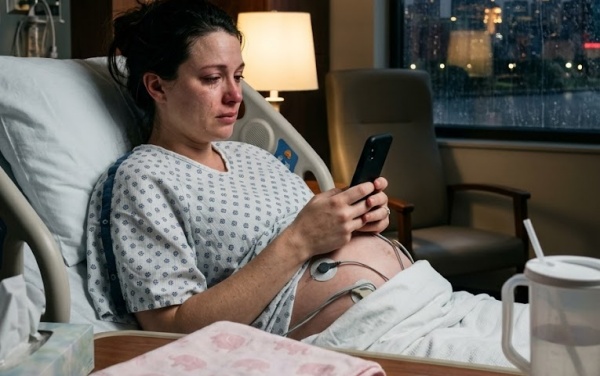
Mark kissed my forehead beside my hospital bed and promised he had to leave for one important business meeting in Chicago. Hours later, while doctors warned me to stay calm for our unborn daughter, an unknown number sent me photos of him on Miami Beach with another woman in his arms. I didn’t scream, beg, or call him from the hospital room. I simply saved the pictures, turned off my phone, and made the quiet decision that changed all three of our lives.
PART I — THE PHOTOS FROM MIAMI
Mark told me he had an important business meeting in Chicago.
That was the sentence he used when he stood beside my hospital bed, wearing his charcoal coat and the expensive watch I had given him on our fifth anniversary. He leaned down, kissed my forehead, and said, “I hate leaving you like this, Claire, but it’s one night. Two at most.”
I believed him because I wanted to.
I was thirty-two weeks pregnant with our first child, admitted to Northwestern Memorial Hospital in downtown Chicago after my blood pressure spiked so high that my OB-GYN stopped speaking in reassuring tones. The words she used were careful but frightening: preeclampsia risk, continuous monitoring, bed rest, possible early delivery.
Our daughter was not supposed to arrive for another eight weeks.
Her name was going to be Lily.
I had chosen the name months earlier, one Sunday morning while Mark and I were sitting in our kitchen in Lakeview, drinking coffee and pretending we were not terrified of becoming parents. He had put his hand on my belly and said, “Lily Bennett. Sounds like a girl who gets whatever she wants.”
I laughed then.
That memory hurt later.
By the time Mark left the hospital room that Thursday afternoon, my ankles were swollen, my IV line itched, and the fetal monitor strapped around my belly made soft rhythmic sounds that were supposed to comfort me. My mother, Elaine, had offered to drive in from Naperville and stay the night, but Mark insisted he would be back soon.
“It’s a client emergency,” he said. “Chicago meeting. If I don’t show up, we could lose the account.”
I was tired enough to accept the explanation.
Mark Bennett was a senior partner at a commercial real estate development firm. His work was unpredictable, demanding, and often dramatic in the way men with seven-figure deals describe inconvenience. Over the years, I had learned not to ask too many questions when he said a meeting was urgent.
That was one of my mistakes.
Not because wives should interrogate their husbands.
Because trust should never require you to become smaller.
After he left, the room felt too quiet.
Rain tapped against the hospital window. The Chicago skyline disappeared into low gray clouds. A nurse named Tanya came in to check my blood pressure and frowned at the monitor before smiling too brightly.
“Let’s try to relax,” she said.
I almost laughed.
Relaxation is a strange instruction when your body is threatening to turn pregnancy into an emergency.
I texted Mark around 7:18 p.m.
Did you land in Chicago okay?
Then I stared at the message and realized how ridiculous it was.
He was supposedly already in Chicago.
Not flying.
Driving across town.
Pregnancy brain, I told myself.
Stress.
Exhaustion.
He did not answer for forty minutes.
When he finally replied, the message said:
Long meeting. Signal bad. Love you. Rest.
Signal bad.
In Chicago.
At a business meeting.
I looked at the text for a long time, and something small inside me shifted.
Not certainty.
Just a thin crack in the surface of belief.
At 9:03 p.m., my phone buzzed again.
Not from Mark.
From an unknown number.
There was no message at first.
Just three photos.
The first showed Mark standing on a beach at sunset, wearing white linen pants and the navy shirt I had packed for our planned babymoon to San Diego before my doctor canceled all travel. His sunglasses were hooked into the open collar. One hand held a cocktail.
The second photo showed him with his arm around a woman in a red dress.
The third showed him kissing her.
Not a friendly kiss.
Not a misunderstanding.
His hands were on her waist.
Her fingers were in his hair.
Behind them was a sign for South Pointe Park Pier.
Miami Beach.
I stared at the screen until the letters and colors blurred.
Then a fourth message arrived.
Your husband said you were too fragile to know. Thought you deserved the truth.
For several seconds, I could not breathe.
The fetal monitor kept making its steady sound.
Lily’s heartbeat.
Fast.
Strong.
Alive.
My own heart felt as if someone had reached into my chest and closed a fist around it.
I did not scream.
I did not throw the phone.
I did not rip the monitor from my belly or demand that someone bring me my clothes so I could catch a flight to Florida and confront him on the sand like a woman in a movie who had never been told her placenta and blood pressure were now part of every decision.
Instead, I turned my face toward the hospital window.
Rain streaked the glass.
Chicago glowed beyond it, blurred and indifferent.
My husband was in Miami with another woman while I lay in a hospital bed carrying his daughter.
The thought was so large that my mind kept walking around it without touching the center.
Tanya returned a few minutes later to check my vitals.
One look at my face, and her smile vanished.
“Claire?”
I tried to say I was fine.
My mouth would not form the lie.
She looked at the blood pressure cuff, then at the monitor.
“Talk to me.”
I handed her the phone.
Not because she was my friend.
Because I needed another human being to confirm that reality had not split open inside my head.
Tanya looked at the photos.
Her jaw tightened in the professional way nurses use when they are angry but still on duty.
“Oh, honey,” she said softly.
That was what broke me.
Not the photos.
Not the kiss.
Not the anonymous message.
The kindness in her voice.
I started crying silently, the kind of crying that does not release anything, only leaks pain from a body too tired to hold it. Tanya put one hand on my shoulder and called my doctor. Within fifteen minutes, the room filled with measured urgency.
My blood pressure had jumped again.
Lily’s heart rate remained stable, but mine did not.
Dr. Marisol Vega, my OB-GYN, came in with her hair pulled back and her expression serious.
“Claire, I need you to listen carefully,” she said. “Whatever is happening emotionally, your body cannot absorb a crisis tonight. We need to keep you and the baby safe.”
I almost laughed again.
Safe.
What a fragile word.
“My husband is in Miami,” I whispered.
Dr. Vega glanced at Tanya, then back at me.
“I’m very sorry.”
“He told me Chicago.”
“I understand.”
“He’s kissing someone else.”
“I understand,” she said again, but her voice did not pretend understanding fixed anything. “Right now, your job is to breathe. Not forgive. Not decide your marriage. Not solve your life. Just breathe.”
That was the first order I could follow.
Breathe.
In.
Out.
For Lily.
For myself.
For the woman I had been ten minutes earlier who still thought betrayal was something that happened to other people in comment sections and private messages, not to pregnant wives strapped to monitors while their husbands posed under palm trees.
My mother arrived just after midnight.
I had not called her.
Tanya did.
Later, I would be grateful for that, because I do not think I could have formed the words.
Mom entered the room wearing jeans, a sweatshirt, and the expression of a woman who had aged five years during the drive from the suburbs. She came straight to my bed and held my face.
“Baby,” she said.
I was thirty-four years old and pregnant, but in that moment, I was her baby too.
I cried then.
Not silently.
Not politely.
I cried like the world had become too heavy.
My mother climbed carefully into the hospital bed beside me, avoiding the IV line and monitor cords, and held me until Dr. Vega came back to check on us.
“Do not call him tonight,” my mother said into my hair.
I pulled back.
“He should know I know.”
“He can know when knowing helps you. Not one second before.”
That sentence stayed with me.
All my life, I had believed truth demanded immediate confrontation. If someone hurt you, you spoke. If someone lied, you exposed it. If your husband betrayed you, you called him and made him hear the sound of the damage.
But lying in that hospital bed, with my daughter still inside me and my blood pressure unstable, I realized confrontation would feed him my crisis.
And he had already taken enough.
So I made the first quiet decision.
I did not call Mark.
I saved the photos.
I screenshotted the unknown number.
I forwarded everything to my mother.
Then I turned off my phone.
Not because I was weak.
Because I was done letting him decide the shape of my pain.
PART II — THE MARRIAGE BEFORE MIAMI
Mark and I had been married for six years.
We met at a charity auction for a children’s hospital on the Near North Side, which now feels almost cruelly symbolic. I was working in nonprofit communications then, wearing a black dress I bought on sale and heels that hurt by the second hour. Mark was charming donors near the silent auction table, laughing easily, making everyone feel like he had arrived specifically to listen to them.
He was handsome in the way that made people forgive arrogance before naming it.
Dark hair.
Blue eyes.
Expensive suit.
A smile that appeared warm until you learned how often he used it as a tool.
At twenty-eight, I mistook confidence for stability.
Many women do.
Mark asked me about my work. Not in the polite way men ask before returning to themselves, but with real-seeming interest. When I told him I wrote campaign stories for families whose children had survived rare illnesses, he said, “That must take a strong heart.”
I thought that was beautiful.
Now I hear the calculation.
He was good at identifying what people wanted to believe about themselves.
Our early relationship was intense and polished. Fancy dinners in River North, weekend trips to Door County, flowers delivered to my office with handwritten cards. He called when he said he would. He opened doors. He remembered small details.
My mother liked him at first.
My father, who died two years into our marriage, liked him less.
Dad once said, “That man is always selling something.”
I laughed it off.
Mark proposed on the rooftop of the LondonHouse Chicago, with the river glowing below us and a photographer hidden near the bar. It was cinematic, public, perfect for social media, and slightly overwhelming. When I said yes, strangers applauded.
That should have bothered me.
It did not.
At our wedding, Mark cried during my vows.
At least, I thought he did.
We bought a condo in Lakeview, two bedrooms, exposed brick, a kitchen island I loved, and a nursery that stayed a guest room longer than either of us expected. For the first few years, our life looked successful from the outside. We hosted dinners. We traveled. We joined a gym we rarely used. We talked about children as if wanting them were enough to summon them.
Then pregnancy did not happen.
Month after month.
Year after year.
Doctors called it “unexplained,” the most infuriating word in reproductive medicine. We tried hormone support. Timed cycles. Endless bloodwork. Mark came to appointments at first, holding my hand and asking good questions.
Then he got busier.
Meetings.
Travel.
Deals.
“Babe, I want to be there,” he would say. “But this project is a monster.”
Eventually, I stopped expecting him in waiting rooms.
That was how loneliness entered our marriage: not with cruelty, but with absence that always came carrying an excuse.
When I finally got pregnant, I told Mark on a cold morning in February by placing the positive test beside his coffee mug.
For one shining moment, he was everything I hoped he would be.
He cried.
He knelt in front of me and pressed his face to my stomach though there was nothing to see yet. He called me “Mama” for a week, which embarrassed and delighted me. He bought three parenting books and read half of one.
I let myself believe fatherhood would soften him into presence.
For a while, it did.
He came to the twelve-week ultrasound. He posted the announcement photo after asking my permission. He painted one wall of the nursery pale green and joked that Lily would inherit his business instincts and my stubbornness.
But by the second trimester, the old patterns returned.
Late nights.
Guarded texts.
Phone facedown on counters.
New cologne.
A fitness routine he suddenly cared about.
These details sound obvious now, written in a list. At the time, each one had an explanation. The new project in Florida. The pressure from investors. The client dinners. The workouts because he wanted to be “a healthy dad.”
I wanted to believe in the family we were building.
Wanting can make a woman generous with evidence.
The woman in the photos was Sienna Cole.
I learned her name the morning after the pictures arrived, though I had heard it before.
Sienna was a marketing consultant for a luxury condo development in Miami that Mark’s firm had been courting for months. She was twenty-nine, according to LinkedIn. Former pageant contestant. University of Miami graduate. Glossy hair, wide smile, the kind of woman who seemed designed for beachfront renderings and champagne launch parties.
Mark mentioned her once over dinner.
“Sienna’s handling brand positioning on the Florida deal,” he said. “Sharp woman. A little dramatic, but good at what she does.”
I remembered looking up from my salad.
“Dramatic how?”
He shrugged.
“You know. Miami dramatic.”
I did not know.
I was too pregnant, tired, and swollen to care.
Now I looked at her face in the photo and understood that “dramatic” had probably meant willing. Available. Flattering. A mirror that showed Mark a version of himself untouched by hospital beds, blood pressure cuffs, and the responsibility of a baby arriving too soon.
Men like Mark rarely cheat only because a woman is beautiful.
They cheat because another woman offers them a self-image without obligation.
The morning after the photos arrived, my mother sat beside my hospital bed with a legal pad.
That was my mother.
Some women bring casseroles to a crisis.
Elaine Holloway brought lists.
“We need to think,” she said.
“I don’t want to think.”
“I know.”
“I want to disappear.”
“I know that too.”
She wrote three headings.
Medical. Legal. Practical.
I stared at the page.
“You think I need a lawyer?”
“I think you need information before emotion makes promises.”
“I’m married.”
“Yes.”
“I’m pregnant.”
“Yes.”
“I don’t know if I want a divorce.”
“You don’t have to know today.”
She underlined Legal anyway.
At first, I was angry.
Not at her.
At reality.
There is something obscene about discussing lawyers while a baby monitor traces your daughter’s heartbeat. Marriage is supposed to protect a pregnant woman from becoming strategic while hospitalized. But betrayal has no manners. It arrives whenever it wants and leaves paperwork behind.
By 10:00 a.m., Mark had called seven times.
I had not answered.
His texts escalated from casual to confused to irritated.
Morning. How are my girls?
Claire?
Did your mom say something?
Why is your phone going straight to voicemail?
I’m in meetings all day but this is not okay. Call me.
This is not okay.
I laughed when I read that one.
My blood pressure monitor did not appreciate the humor.
At noon, Dr. Vega told me I would not be discharged soon. My numbers remained concerning. They were starting medication and discussing steroid injections to help Lily’s lungs in case early delivery became necessary.
The words settled over me like cold ash.
Early delivery.
NICU.
Risk.
Mark was on a beach.
My mother squeezed my hand.
“I’m calling your brother,” she said.
“No.”
“Claire.”
“No,” I repeated. “Not yet. If Ben knows, he’ll drive to Miami and end up on the news.”
My brother loved me loudly and sometimes impractically.
Mom sighed because she knew I was right.
At 2:16 p.m., Mark texted again.
Boarding soon. Back late tonight. Can we stop with whatever this is?
Boarding.
So he had been away.
Not Chicago.
Not a long meeting.
A flight.
My hands shook as I typed my first response.
Do not come to the hospital tonight.
He answered immediately.
Excuse me?
Then:
Claire, what the hell is going on?
I looked at the Miami photo one more time.
Then I typed:
I know where you were. I have the pictures.
For three minutes, nothing.
No dots.
No call.
Nothing.
Then my phone rang.
Mark.
I silenced it.
He called again.
And again.
Then the texts came.
It’s not what you think.
Who sent you something?
Claire, do not do this while you’re in the hospital.
You’re putting stress on the baby.
There it was.
The move.
His betrayal became my danger.
My reaction became the threat.
I set the phone facedown.
My mother read the last message and became so still that I briefly feared for Mark’s future safety.
“He does not get to use this baby as a shield against his own behavior,” she said.
I nodded, but I could not speak.
Because somewhere beneath the anger, a terrible question had opened.
If he could do this now, when I was pregnant and hospitalized, what else had I not known?
The answer would come sooner than I expected.
PART III — THE QUIET DECISION
Mark came to the hospital anyway.
Of course he did.
At 9:42 p.m., he walked into my room carrying flowers from the hospital gift shop and wearing the wrinkled clothes of a man who had spent the day rewriting a story during a flight. His face was pale. His eyes moved from me to my mother to the fetal monitor, as if searching for the version of the room where he still had authority.
My mother stood.
“Leave.”
Mark ignored her.
“Claire, we need to talk.”
I looked at the flowers.
Pink roses.
He had never bought me pink roses before.
Sienna had been wearing a pink bracelet in one of the photos.
That connection may have meant nothing.
My mind made it anyway.
“No,” I said.
He blinked.
“No?”
“No, we do not need to talk tonight.”
“Claire, come on.”
My mother moved toward the door.
“I’ll get security.”
Mark’s face hardened.
“Elaine, this is between me and my wife.”
I felt something shift inside me then.
Not Lily.
Me.
For years, Mark had controlled rooms by deciding which relationships mattered and which people were allowed to speak. My mother was inconvenient because she saw too much. My friends were “dramatic” when they questioned his absences. My concerns were “stress” or “hormones” or “misunderstandings.”
But lying in that bed, I suddenly understood that power often survives because everyone keeps accepting its vocabulary.
My wife.
As if that title gave him access.
As if marriage were a badge instead of a responsibility.
I pressed the call button.
Mark stared at me.
“What are you doing?”
“Calling the nurse.”
“For what?”
“To ask that you be removed if you don’t leave.”
His mouth opened.
Closed.
He looked genuinely stunned.
That almost made me laugh.
Not because the situation was funny.
Because men who rely on forgiveness as a default setting are always surprised when boundaries arrive in complete sentences.
Tanya came in.
“Everything okay?”
I kept my eyes on Mark.
“I don’t want visitors tonight.”
Tanya did not ask for details.
“Of course.”
Mark looked from her to me.
“Claire, you can’t seriously—”
“She can,” Tanya said.
Her voice was calm.
Final.
Mark’s jaw tightened.
“This is insane.”
“No,” I said quietly. “Miami was insane. This is me resting.”
The words landed.
His face changed.
For a second, guilt cracked through the anger.
Then he lowered the flowers onto the side table like a peace offering nobody had requested.
“I’ll come back tomorrow,” he said.
“No.”
He stared.
“When, then?”
“When I decide.”
My mother opened the door.
Mark looked at my stomach.
“At least let me—”
“No.”
He did not finish.
He left.
The room exhaled.
Tanya removed the flowers without asking and said, “I’ll put these at the nurses’ station.”
My mother sat beside me.
I shook for ten minutes.
Boundaries are powerful, but they are not painless.
The next morning, I made the quiet decision Mark would not understand until it was too late.
I was leaving him.
Not that day.
Not dramatically.
Not while my blood pressure was unstable and my daughter’s life might depend on every calm hour we could buy.
But inside myself, the marriage ended in that hospital room.
People imagine divorce as a single event: papers signed, rings removed, someone moving out. In truth, the ending often happens privately first. A small door closes inside you. Love may still be standing on the other side, confused and pleading, but you know you cannot live there anymore.
I did not scream.
I did not beg.
I did not chase him to Miami.
I asked my mother for the legal pad.
Under Legal, I wrote:
Protect Lily. Protect myself. Document everything.
Then I called an attorney.
Her name was Nora Kaplan, a family lawyer in Chicago recommended by one of my mother’s friends. Nora did not dramatize. She did not promise revenge. She asked whether I was safe, whether I had access to accounts, whether we owned property jointly, and whether Mark had ever threatened me.
“No,” I said. “He’s not violent.”
“Good,” she replied. “Emotional betrayal can still destabilize you, but it helps to clarify risk.”
I appreciated that.
Not every wound is a bruise.
Nora explained Illinois divorce law in plain language. Illinois is a no-fault divorce state, meaning I would not need to prove adultery to end the marriage. Marital property would be divided equitably, not necessarily equally. Child support and parenting time would be handled based on the child’s best interests once Lily was born.
“What should I do now?” I asked.
“Focus on your health,” Nora said. “Do not make threats. Do not post anything. Do not empty accounts. Gather financial records if you can access them lawfully. Communicate in writing whenever possible.”
That last sentence became another rule.
Writing.
Documentation.
No emotional hallway arguments.
No late-night calls where Mark could twist my words later.
No dramatic confrontation that spiked my blood pressure and gave him a chance to call me unstable.
Mark hated that.
Over the next week, he sent apologies, explanations, and accusations in waves.
I made a horrible mistake.
Sienna meant nothing.
You’re my wife. Lily is my daughter.
Your mom is poisoning you.
You can’t shut me out of this pregnancy.
I was scared too, Claire. You don’t know what it’s like to feel useless while your wife is in a hospital bed.
That one made me stare at the wall for a long time.
Useless.
So he had made himself useful to another woman.
I did not answer most messages.
When I did, I kept it short.
Medical updates will be shared when appropriate. Do not come to the hospital without confirmation.
He called me cold.
Maybe I was.
Or maybe he had mistaken my previous warmth for a lack of spine.
On the eighth day of my hospital stay, Lily’s condition changed.
Her heart rate dipped twice overnight.
My labs worsened.
Dr. Vega came in early, pulled up a chair, and explained that we were approaching the line where keeping Lily inside might become more dangerous than delivering her.
I heard the words.
I understood them.
Still, I looked down at my belly and whispered, “She’s too little.”
Dr. Vega’s expression softened.
“She is little. But little babies can be strong. And you have been strong for both of you.”
I wanted to tell her I was not strong.
Strong women are not supposed to fall apart because of beach photos. Strong women do not cry when hospital commercials show families holding babies. Strong women do not wake at 3:00 a.m. thinking, maybe if I answer Mark, he will become the man I need before our daughter arrives.
But maybe strength is not the absence of those thoughts.
Maybe it is refusing to let them make decisions.
They gave me steroid injections for Lily’s lungs.
They adjusted medication.
They monitored us constantly.
My mother slept in a chair that did terrible things to her back and refused to leave except to shower at a nearby hotel. My brother Ben eventually found out, drove in from Milwaukee, and stood outside my room crying because I had made Mom promise not to tell him details until he arrived.
“I’m going to kill him,” Ben said.
“No, you’re not.”
“I’m going to severely inconvenience him.”
“That’s also not helpful.”
He wiped his face and tried to smile.
“What can I do?”
“Bring me real coffee after the baby is born.”
“You’re not supposed to have coffee.”
“After.”
“Done.”
Mark was not present when the decision was made to deliver Lily.
I had notified him through a brief message:
Doctors are monitoring possible early delivery. I will update when I can.
He replied:
I’m coming now.
I did not respond.
By the time he reached the hospital, I was being prepped for an emergency C-section.
My blood pressure had become dangerous.
Lily needed to come out.
The room moved fast after that.
Consent forms.
An IV adjustment.
An anesthesiologist explaining things I tried to absorb.
My mother in scrubs, holding my hand.
A bright surgical room.
Cold air.
Blue drapes.
The strange pressure of surgery without pain.
I remember shaking.
I remember my mother saying, “Look at me, not the lights.”
I remember asking if Lily would cry.
Then she did.
Small.
Furious.
Alive.
My daughter entered the world at 3:27 p.m. on a Friday, weighing 4 pounds, 1 ounce.
They held her up for half a second before taking her to the NICU team.
She was tiny.
So tiny.
But she cried like she had an argument to make with the universe.
I cried too.
Not from betrayal.
Not from fear.
From the fierce, overwhelming knowledge that she was here, and whatever came next, my life now had a center Mark did not control.
I saw him hours later.
He was standing outside the NICU doors, pale and wrecked, still wearing the visitor badge my mother had allowed only because she said, “Lily may need a father, but Claire does not need a husband right now.”
He looked at me in the wheelchair.
“Claire,” he whispered.
I looked through the glass at our daughter in an incubator, tubes and wires around her impossibly small body.
Then I said the truth.
“You chose Miami while I was fighting to keep her safe.”
His eyes filled.
“I know.”
“No,” I said. “You know you got caught. You don’t know yet what you chose.”
He looked at Lily.
For the first time, I saw the weight begin to land.
Good.
Let it.
PART IV — WHAT WAITED WHEN HE CAME HOME
Mark thought the worst truth waiting for him was divorce.
It was not.
The life-destroying truth was larger than our marriage, older than Miami, and buried in documents he had assumed I would never understand.
Two weeks after Lily was born, while she was still in the NICU gaining weight ounce by ounce, I found the folder.
Not physically.
Digitally.
Mark and I shared a home office, though he had always treated the filing cabinets and financial software like his territory. Before Miami, I accepted that because he was “better with numbers.” After Miami, Nora told me to gather records I could lawfully access.
So I logged into our shared cloud storage.
Mortgage statements.
Tax returns.
Insurance documents.
Investment accounts.
Then a folder labeled Bennett Holdings — Personal.
At first, I thought it was routine.
Mark had a small LLC for investment properties. We had discussed it years earlier. Or rather, he had discussed it while I nodded, trusting that married people do not hide landmines inside spreadsheets.
Inside the folder were loan documents.
Promissory notes.
Wire confirmations.
And one document that made my entire body go cold.
A line of credit secured partly by our Lakeview condo.
My signature appeared on the document.
But I had never signed it.
I knew immediately.
Not because I understood every legal implication, but because the signature looked like a performance of my handwriting. Close enough for someone not looking carefully. Wrong enough for me to feel violated in a new way.
I called Nora from the NICU family lounge.
My voice was so calm it scared me.
“I found financial documents with my signature on them,” I said. “I don’t think I signed them.”
Nora went silent for half a second.
Then her voice sharpened.
“Do not confront Mark about this yet. Send them to me securely.”
“What does it mean?”
“It may mean nothing if there’s an explanation. It may mean fraud. We need to verify.”
Fraud.
The word sat beside me under fluorescent hospital lights while families whispered, vending machines hummed, and my premature daughter slept behind glass.
By then, Mark had transformed into remorseful father mode.
He came to the NICU daily.
He washed his hands carefully, spoke softly to Lily, brought me food I did not ask for, and looked devastated whenever a nurse mentioned how well “Mom” was doing. He apologized constantly. He said Miami had been a mistake, that Sienna was over, that nearly losing us had changed him.
Maybe some of that was true.
Maybe all of it was.
But remorse after exposure is not character.
Character is what you do when you think your wife will never know.
I said little.
Watched more.
Nora hired a forensic document examiner.
She also referred me to a financial investigator experienced in divorce cases involving hidden assets. I hated every step, not because I doubted the need, but because part of me still grieved the man I had thought Mark was. Each document felt like burying him again.
The findings came back quickly enough to make me sick.
My signature had likely been forged on two financial instruments connected to Bennett Holdings.
The line of credit had been used to fund a development stake in Florida.
Florida.
Miami.
Sienna’s project.
Marital assets and debt exposure had been shifted without my informed consent. There were transfers to accounts I had never seen. Payments marked as consulting expenses. One recurring payment to a firm tied to Sienna Cole.
The affair had not just been emotional and physical betrayal.
It was financial betrayal.
While I was pregnant.
While I was medically vulnerable.
While I believed Mark was building our family’s future.
He had used parts of that future as collateral for a life he did not want me to see.
Nora’s advice became firmer.
“We may need to involve additional counsel,” she said. “Possibly civil, possibly criminal implications depending on the documents, lenders, and intent. For now, we proceed carefully.”
“Will this hurt Lily?”
“That is exactly why we proceed carefully.”
I looked through the NICU window at my daughter.
She had gained three ounces.
Three ounces had become the most important number in my life.
Not the debt.
Not the development stake.
Not the value of the condo.
Three ounces.
Mark asked me one evening why I seemed “farther away.”
We were sitting in the NICU near Lily’s isolette. He had one finger through the little access port, and Lily’s tiny hand rested against it.
“You barely talk to me,” he said.
I looked at our daughter.
“She needs quiet.”
“I’m not talking about here.”
“I am.”
He sighed.
“I know I destroyed trust. But if you won’t even try—”
I turned to him.
“Do not finish that sentence.”
He stopped.
“If I won’t even try?” I repeated quietly. “I was in a hospital bed while you were in Miami. I had surgery. Our daughter is in the NICU. And you are already positioning yourself as the man waiting patiently for his wife to stop being hurt.”
His face reddened.
“That’s not what I meant.”
“It’s what you reached for.”
He looked away.
That was the thing about Mark.
Even in remorse, control had muscle memory.
Lily came home after twenty-six days in the NICU.
She weighed 5 pounds, 3 ounces.
The discharge nurse reviewed feeding schedules, temperature checks, follow-up appointments, and warning signs. I listened as if preparing for the most important exam of my life. Mark listened too, taking notes, asking questions, looking every inch the devoted father.
Maybe he was one.
People can be sincere in one role and destructive in another.
That is one of the hardest truths adulthood teaches.
I did not return to the condo with him.
Instead, Lily and I went to my mother’s house in Naperville.
Mark argued at first.
“We need to bring our daughter home.”
“I am bringing her home,” I said.
“To your mother’s house?”
“To safety.”
He flinched.
“You think I’m unsafe?”
I looked at Lily sleeping in her car seat, impossibly small under a pink blanket.
“I think the life we had is unsafe for me. That affects her.”
He had no answer.
The formal divorce petition was filed the following week.
The financial claims followed after.
Mark received the paperwork at his office.
By 5:30 p.m., he was at my mother’s front door.
Ben answered.
That was fortunate for everyone.
Mark demanded to see me.
Ben stepped onto the porch and closed the door behind him.
“You’re not doing this here.”
“I need to talk to my wife.”
“She filed. You can talk through lawyers.”
“My daughter is in there.”
“And if you raise your voice on this porch, she will remain in there while you leave.”
Mark looked past him toward the house.
I watched from the upstairs window, holding Lily against my chest.
My daughter made a soft sound in her sleep.
Mark did not see me.
For once, I saw him from a distance.
Not as the man I married.
Not as the father crying beside an incubator.
As a man whose choices had finally arrived home before he did.
He left after ten minutes.
The next morning, Nora called.
“His attorney contacted me,” she said. “They want to settle quickly.”
“Of course they do.”
“Yes,” she said. “Which means we do not.”
PART V — THE LIFE AFTER THE LIE
Divorce did not feel like freedom at first.
It felt like learning to walk while carrying a baby, a breast pump, a stack of legal documents, and a grief so heavy it seemed to have its own weather system.
Lily needed frequent pediatric appointments.
Preemie follow-ups.
Weight checks.
Feeding plans.
I learned to celebrate ounces, wet diapers, and the tiny sigh she made after finishing a bottle. My life became measured in three-hour cycles while attorneys discussed debt exposure, forged signatures, asset tracing, temporary support, and parenting schedules.
Motherhood kept me from collapsing.
Not because babies make pain disappear.
Because babies are beautifully unreasonable.
Lily did not care that my husband had betrayed me. She cared that she was hungry. She did not care that financial investigators were examining wire transfers. She cared that her swaddle was wrong. She did not care that I cried in the laundry room at 2:00 a.m. She cared that I returned when she called.
So I returned.
Again and again.
That is how I survived.
Mark continued trying to perform repentance.
Some of it became real over time.
Some of it remained performance.
At first, he sent long emails about our marriage, his childhood wounds, his fear of fatherhood, his shame, his spiritual awakening after nearly losing Lily. Nora advised me not to engage emotionally. Dr. Vega referred me to a therapist who said, “You can acknowledge his humanity without volunteering to rehabilitate it.”
I wrote that down.
Mark eventually admitted the affair had lasted four months.
Then six.
Then, under financial discovery, almost a year.
Staggered truth is its own form of cruelty.
Every new fact reopened the wound while proving why I could not trust the previous apology.
Sienna disappeared from public view after the financial issues surfaced. Her consulting firm denied wrongdoing through counsel. Mark claimed she did not know marital assets were involved. Maybe she didn’t. Maybe she did. I stopped caring once my attorney confirmed she was not necessary to my healing.
The forged signatures mattered more.
The court process was slow, careful, and expensive. The document examiner’s report became central. The lender faced uncomfortable questions about verification. Mark’s firm placed him on leave when the financial allegations became impossible to keep entirely private.
He was not arrested in some dramatic television moment.
Real life is usually less theatrical.
But his professional reputation suffered.
Deals stalled.
Partners distanced themselves.
The Florida development collapsed after financing complications and internal review.
The man who had chosen Miami to feel powerful returned to Chicago and watched Miami become the first domino in the collapse of the identity he had built.
I did not celebrate.
That surprises people when I say it.
Revenge fantasies are simpler than real consequences. When Mark’s life began unraveling, he was still Lily’s father. Every loss he suffered would, in some form, brush against her future too. I wanted accountability, not destruction for entertainment.
But I also did not rescue him.
That distinction saved me.
The divorce settlement was finalized when Lily was eighteen months old.
I received primary residential parenting time, with Mark having a structured schedule that expanded gradually as Lily grew and as he complied with court orders. Financially, the forged obligations were addressed separately, with protections placed around my assets and Lily’s support. The condo was sold. Debts were assigned according to findings and negotiated agreements I am still not permitted to discuss in full.
What I can say is this:
Documentation saved me.
My mother’s legal pad saved me.
Not answering late-night emotional calls saved me.
Leaving the hospital drama to medical professionals while I let lawyers handle legal reality saved me.
A quiet decision can be more powerful than a public explosion.
Mark first held Lily overnight when she was two.
I did not sleep that night.
Not because I believed he would harm her, but because motherhood after betrayal comes with an overdeveloped alarm system. He sent a photo at 7:04 p.m., as agreed: Lily in dinosaur pajamas, holding a board book upside down, looking suspicious of bedtime.
I stared at the photo until I could breathe.
Then I put the phone down.
Co-parenting with someone who betrayed you requires emotional discipline that nobody applauds enough. You must separate the person who wounded you from the parent your child needs them to become, while still maintaining boundaries sharp enough to protect reality. Too much bitterness poisons the child. Too much softness invites old manipulation.
I learned the middle slowly.
Mark became a more consistent father than he had been a husband.
That is not a redemption arc.
It is a fact.
He showed up for pediatric appointments when invited. He paid support on time. He learned Lily’s feeding preferences, her fear of automatic hand dryers, her love of ducks, and the way she needed two bedtime songs but would request five if she sensed weakness.
When she was three, she called him “Daddy Mark” for six weeks because she had a classmate with two dads and apparently decided everyone needed clarification.
He cried when he told me.
I almost felt sorry for him.
Almost.
By then, I had moved into a townhouse in Evanston, close enough to the lake that morning walks became part of our life. Lily grew strong, stubborn, and funny. Her early fragility became a story I could tell without my voice breaking. She loved blueberries, sidewalk chalk, and yelling “big water!” every time we saw Lake Michigan.
I returned to work part-time at first, then full-time in nonprofit communications, eventually becoming director of donor strategy for a children’s health foundation.
That was not planned.
But after living through the NICU, I understood those families in a way no training could teach.
Sometimes I stood in hospital hallways for work and remembered the night the photos came. The way Tanya’s face changed. The way Dr. Vega told me to breathe. The way my mother divided my disaster into Medical, Legal, Practical because love sometimes looks like headings on a legal pad.
I donated to the NICU fund every year on Lily’s birthday.
Not in Mark’s name.
Not in mine.
In honor of every baby who arrives before the world is ready.
When Lily was five, she asked why Daddy and I did not live together.
We were sitting on the floor building a crooked block tower.
I had practiced answers for years, but motherhood loves to test you when your hair is unwashed and you are surrounded by wooden rectangles.
“Your dad and I realized we could take better care of you in two homes than in one home together,” I said.
She considered this.
“Did you fight?”
“Sometimes.”
“Do you still fight?”
“No. We use our words better now.”
She nodded, then knocked down the tower.
That was enough truth for five.
Someday, she will know more.
Not the adult details before she is ready.
Not the Miami photos as weapons.
Not the financial betrayal as a burden she must carry.
But she will know that her mother chose safety, truth, and peace over appearances. She will know that love for a child does not require a woman to stay where she is being lied to. She will know that families can change shape without becoming failures.
Mark apologized many times over the years.
Some apologies were selfish.
Some were real.
The realest came when Lily was six, after her kindergarten winter concert. She had stood on stage wearing a paper snowflake crown, singing half the words and waving at both of us with the confidence of a tiny mayor.
Afterward, Mark and I stood in the school hallway while Lily showed her grandmother the cookie table.
He looked tired.
Older.
Not ruined, exactly, but stripped of some shine.
“I used to think losing you was the consequence,” he said.
I looked at him.
“It wasn’t?”
He shook his head.
“The consequence is realizing Lily’s life began while I was becoming someone I’m ashamed of. I can be a good father now, but I can never remove that from her beginning.”
I said nothing for a moment.
Then I answered honestly.
“No. You can’t.”
His eyes filled.
“I’m sorry.”
“I know.”
And I did know.
It did not change the past.
But it made the present less dishonest.
That mattered.
People sometimes ask if I ever forgave him.
I never know how to answer because forgiveness is not a switch. It is not a Facebook caption or a Sunday sermon or a clean emotional achievement. For me, forgiveness looked like no longer needing Mark to suffer in order for my pain to be valid.
It looked like answering co-parenting messages without shaking.
It looked like letting Lily love him without feeling betrayed by her innocence.
It looked like building a life so full that Miami became a chapter, not the title.
But trust?
No.
Not in the old way.
And that is okay.
Some doors close permanently for good reason.
I did not remarry quickly.
I dated slowly, cautiously, and with standards my younger self might have called unforgiving. I called them evidence-based. If a man mocked boundaries, he did not get a second date. If he called his ex “crazy,” I asked enough questions to learn why. If he treated honesty like a favor, I left before dessert.
When Lily was seven, I met Aaron Mitchell, a widowed high school principal with kind eyes and a teenage daughter who thought both of us were embarrassing.
Aaron did not sweep me off my feet.
Thank God.
He stood near me patiently while I decided whether my feet wanted to move at all.
He learned early that I did not respond well to grand gestures but noticed consistency. He called when he said he would. He showed up on time. He did not pressure me to introduce him to Lily. When I told him the outline of my divorce, he said, “That must have been lonely.”
Not scandalous.
Not dramatic.
Lonely.
That was the word that found me.
Eventually, Lily met him at a park.
She asked him if principals knew all the rules or just pretended.
He said, “Mostly we pretend with confidence.”
She approved.
Our life now is not the one I planned.
It is quieter.
Stronger.
More honest.
Lily is nine and healthy, with my mother’s stubbornness, Mark’s blue eyes, and a laugh that still feels like proof. She plays soccer badly but enthusiastically, reads books about animals, and believes pancakes should count as dinner if blueberries are involved. Mark attends games, parent conferences, and birthdays. Aaron comes when appropriate. My mother sits in a folding chair with snacks like she is managing a small army.
From the outside, we probably look modern and complicated.
From the inside, we are simply people who learned that family is not always saved by staying married.
Sometimes family is saved by telling the truth.
I still have the Miami photos.
Not on my phone.
Not somewhere I look.
They are stored with legal documents in a sealed file because paper remembers what emotions sometimes try to soften. I do not keep them to punish Mark. I keep them because there was a time when I almost let his explanations become larger than my reality.
Never again.
The night I received those photos, I thought my life was ending in a hospital bed.
In a way, it was.
The marriage I thought I had ended there.
The version of me who believed silence could keep peace ended there.
The woman who waited for Mark to choose correctly ended there.
But another life began too.
It began with a nurse saying, “Oh, honey.”
With my mother driving through rain.
With a legal pad.
With a premature baby crying in an operating room.
With a quiet decision made before I knew how I would survive it.
Mark chose Miami with his mistress over his pregnant wife.
That is the sentence people remember because it is dramatic.
But the more important sentence is this:
I chose my daughter and myself when it would have been easier to collapse into the lie.
He returned from Miami expecting tears, explanations, maybe a fight he could manage.
Instead, he returned to a truth that destroyed the life he had built on secrecy.
Not all at once.
Not publicly enough for strangers to applaud.
But completely enough that the old life could not continue.
And I am grateful for that now.
Not for the betrayal.
Never for that.
But for the truth.
Because truth, even when it arrives like a blade, can cut you free from a future that was never safe enough to raise a child inside.
