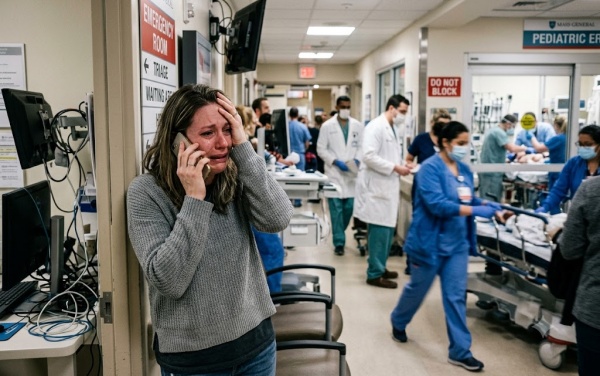
I told my wife I was freezing in Boston, while I was really standing beneath the warm Miami skyline with my mistress. Then my phone rang. My wife’s voice trembled from a hospital hallway as she delivered the news that shattered everything. Our daughter was fighting for her life...
Part 1: The Lie That Finally Caught Me
For months, I told myself I could keep everything separated.
My marriage belonged in one box. My career belonged in another. And the secret life I had built for myself in Miami belonged in a locked box I convinced myself no one would ever open.
I was wrong.
At home, I was Daniel Mercer, husband, father, homeowner, the kind of man who shoveled snow from the driveway before sunrise and remembered to buy oat milk because my wife liked it in her coffee. I lived with my wife, Claire, and our eight-year-old daughter, Lily, in Newton, Massachusetts, in a white colonial house with a red front door and a maple tree that dropped leaves all over the lawn every October.
To our neighbors, we looked like an ordinary New England family. We complained about traffic on the Mass Pike, argued about whether the Red Sox had a chance this season, and took Lily apple picking every fall in Stow. On Sunday mornings, I made pancakes while Claire packed Lily’s soccer bag, and for a long time, I believed those small rituals proved I was still a good man.
But good men do not hide second phones in their luggage.
Good men do not remove their wedding rings before stepping into another woman’s apartment.
Good men do not kiss their wives goodbye in Massachusetts and fly to Florida under a lie.
I worked in corporate finance for a private equity firm in Boston’s Seaport District. My job involved mergers, acquisitions, restructuring plans, and meetings that ran long enough to make any excuse sound believable. If I told Claire I had to stay late at the office, she believed me. If I said I needed to fly to New York, Chicago, or Dallas for a client, she never questioned the itinerary.
That trust became the first thing I stole from her.
Her name was Vanessa. She lived in Miami, in a high-rise condo overlooking Biscayne Bay. She was not the kind of woman people imagine when they hear about affairs. She was not reckless or shallow or cruel. She was intelligent, direct, and emotionally careful in a way I pretended to admire while constantly asking her to ignore the most obvious fact about me.
I was married.
I told her that the first night we met at a finance conference in Palm Beach. I said it with the solemn honesty of a man who wanted credit for confessing the truth before committing the sin.
She asked me if my marriage was over.
I said, “It’s complicated.”
That was the first cowardly thing I did.
By the time summer ended, “complicated” had become hotel rooms, deleted messages, coded calendar entries, and business trips that were only half real. I told myself I was not abandoning my family. I was simply stepping outside my life for a few days at a time so I could breathe.
That was how I justified it.
People imagine betrayal as something dramatic, but most betrayal is administrative. It is flight confirmations, password changes, quiet dinners, false receipts, and the careful timing of phone calls. It is learning how to sound tired when you are actually excited. It is telling your wife you miss her while standing in another woman’s kitchen.
Claire noticed things.
Of course she did.
She noticed when I started guarding my phone. She noticed when I began traveling more. She noticed when I came home from “work trips” with a tan in February. She noticed the way I seemed both present and absent at the same time, sitting at the dinner table while some private part of me stayed somewhere else.
But Claire was tired.
She worked part-time as a school counselor in Brookline, managed most of Lily’s appointments, handled the school emails, paid attention to which sneakers Lily had outgrown, and somehow still remembered when my mother’s birthday was. Marriage can hide a great deal beneath exhaustion. When two people are busy enough, distance can disguise itself as routine.
The week everything collapsed, I was supposed to be in Boston.
That was the absurd part.
I did not even need to invent a city.
There really was a merger meeting scheduled at our Seaport office on a Thursday evening. Senior partners were flying in. Clients were coming from New York. My assistant had booked conference rooms, ordered dinner, and blocked my calendar until 10 p.m.
Claire knew about the meeting.
“Long night?” she asked that morning while pouring coffee into a travel mug.
“Probably,” I said. “We’re trying to get the final structure approved before the weekend.”
She nodded like she had heard that kind of sentence too many times to care about the details.
Lily came into the kitchen wearing mismatched socks and carrying a stuffed otter under one arm.
“Dad, are you coming to my science night tomorrow?” she asked.
I froze for half a second.
Science night.
I had forgotten.
Claire looked at me over her mug.
“I’m going to try,” I said.
Lily narrowed her eyes. “That means maybe no.”
“It means I’m going to try.”
She sighed with the theatrical disappointment only an eight-year-old can fully master. “You should try harder.”
Claire almost smiled.
I kissed Lily on the top of her head, kissed Claire on the cheek, and left the house with my laptop bag and a lie already packed inside me.
By noon, I had told my team I was dealing with a family issue and would dial into the meeting remotely. Then I took an Uber to Logan Airport and boarded a flight to Miami.
The weather in Boston was raw and gray, the kind of late-winter cold that gets under your coat and stays there. When I landed in Miami, the air was warm and soft, and the palm trees outside the airport moved like they had never known guilt.
Vanessa picked me up in a white SUV.
“You look exhausted,” she said.
“I am.”
“Work?”
I looked out the window at the bright Florida sky.
“Everything,” I said.
She reached across the console and squeezed my hand.
I should have pulled away.
I didn’t.
That evening, we stood in her penthouse while the sun set over Biscayne Bay. She had ordered Cuban food from a restaurant in Little Havana because she knew I liked ropa vieja and sweet plantains. Music played softly from her kitchen speaker. The city below glittered in pink and gold, beautiful in the careless way places can be when they are not the ones being destroyed.
I took off my wedding ring and put it in the inside pocket of my suitcase.
I hated myself every time I did it.
But never enough to stop.
At 8:17 p.m., Claire texted me.
How’s the meeting?
I looked around Vanessa’s condo, at the glass walls, the ocean view, the open bottle of red wine on the counter.
Then I typed:
Still going. Long night. I’ll call when I can. Love you.
She replied:
Lily’s been tired all evening. I may put her to bed early. Good luck.
I stared at the words longer than I should have.
Lily had been tired.
She had been tired for weeks, now that I thought about it. Drinking more water than usual. Waking up at night. Losing a little weight. Claire had mentioned it once, maybe twice, but I had been distracted. I always had a meeting, a flight, an email, a crisis that sounded bigger because it had dollar signs attached.
Vanessa came up behind me.
“Everything okay?”
“Yeah,” I said. “Just Claire.”
“You should call her if you need to.”
“No,” I said too quickly. “It’s fine.”
That was the last easy lie I ever told.
At 9:42 p.m., my phone rang.
Claire.
I almost ignored it.
That is the sentence I will never forgive myself for.
For one second, one unforgivable second, I looked at my wife’s name and thought about inconvenience. I thought about how difficult it would be to answer, how carefully I would have to control my voice, how quiet Vanessa would need to be.
Then I answered.
“Hey,” I said. “Everything okay?”
There was noise behind her. Beeping. Footsteps. A voice over an intercom. The hollow echo of a hospital hallway.
“Daniel,” she said.
My body went cold before my mind understood why.
“Claire? What happened?”
“It’s Lily.”
I stood up.
“What do you mean?”
“She wouldn’t wake up,” Claire said, and her voice cracked on the last word. “I went to check on her, and she was sweating, and she wouldn’t open her eyes. I called 911. We’re at Boston Children’s Hospital.”
The room tilted.
“What?”
“They’re running tests. They won’t tell me much yet. They said something about her blood sugar. Daniel, she wouldn’t wake up.”
“I’m coming,” I said automatically. “I’m coming right now.”
“Where are you?”
The question hit me, but not hard enough yet.
“I’m at the office,” I said.
As soon as the lie left my mouth, Vanessa stepped into the room behind me and whispered, “Daniel, is she okay?”
It was soft.
It was concerned.
It was unmistakably a woman’s voice.
Claire heard it.
The silence that followed was not empty. It was full of every late meeting, every unanswered call, every strange distance she had tried to explain away because she loved me.
Then she asked again.
This time, her voice was quiet.
Terrifyingly quiet.
“Daniel, where are you?”
For months, I had lied with confidence. I had lied with calendar invites, airline apps, fake exhaustion, and the calm tone of a man who believed he could manage any crisis. But my daughter was unconscious in a hospital in Boston, and I was standing barefoot in a Miami penthouse with my wedding ring hidden in my suitcase.
There was no lie left large enough.
I closed my eyes.
“I’m in Miami,” I said.
Claire did not speak.
“I can explain.”
“No,” she said. “You can’t.”
Then the call ended.
Part 2: The Longest Flight of My Life
For a few seconds, I stood perfectly still.
Vanessa was watching me from across the room. Her face had changed. The warmth was gone, replaced by something that looked like shock and recognition, as if she had finally seen the whole shape of the thing we had been pretending was smaller than it was.
“My daughter’s in the hospital,” I said.
“I heard.”
“I have to go.”
“Yes,” she said. “You do.”
I grabbed my suitcase and opened it with shaking hands. Clothes spilled onto the floor. My wedding ring fell out of the inside pocket and rolled beneath the chair.
Neither of us moved for a moment.
Then Vanessa bent down, picked it up, and placed it on the counter.
“You told me your marriage was basically over,” she said.
I looked at the ring.
“I know.”
“Was it?”
I wanted to say yes.
Even then, some pathetic part of me wanted to protect the story I had told, because if the story died, all that remained was the kind of man I really was.
“No,” I said.
Vanessa nodded slowly.
Her eyes filled with tears, but she did not let them fall.
“Then don’t come back here.”
I had no defense.
At Miami International Airport, I paid more than $1,600 for the first available flight back to Boston. It left just after midnight. Every minute before boarding felt like punishment.
I called Claire again and again.
She did not answer.
I texted her.
I’m on my way.
Please tell me how Lily is.
Claire, I’m sorry.
Please.
At 11:23 p.m., she finally replied.
She’s in the ICU. They think it’s diabetic ketoacidosis. I don’t have the energy to explain it to you. Get here.
Diabetic ketoacidosis.
I searched the words on my phone with trembling fingers. The results were clinical and terrifying. Serious complication. High blood sugar. Lack of insulin. Life-threatening if untreated.
I sat at the gate surrounded by people eating pretzels, charging phones, and sleeping with their mouths open. It felt obscene that the world had not stopped. My daughter was in an ICU bed, and a man beside me was complaining because his flight to Newark had been delayed forty minutes.
When the plane finally lifted off, I watched Miami disappear below me.
I thought about Lily’s face that morning.
Mismatched socks. Stuffed otter. Science night.
“You should try harder,” she had said.
The memory struck so hard I pressed my fist against my mouth.
Somewhere over the East Coast, I opened my photo gallery. Lily at Fenway Park wearing a Red Sox cap too big for her head. Lily on Cape Cod, holding a melting ice cream cone in one hand and a seashell in the other. Lily asleep on the couch under a fleece blanket, one foot sticking out, her book fallen open on her chest.
Then Claire.
Claire holding newborn Lily in a hospital bed, exhausted and radiant. Claire laughing during a snowstorm because I had slipped on the front steps and landed in a pile of powder. Claire on our tenth anniversary in Bar Harbor, her hair tangled from the wind, her face turned toward the Atlantic.
We had been happy once.
Not perfect. Not cinematic. But happy in the way real life allows: grocery lists, inside jokes, shared exhaustion, mortgage payments, birthday candles, and the quiet relief of finding the same person beside you at the end of a long day.
I had not lost that happiness all at once.
I had traded it away in pieces.
The plane landed at Logan just before 5 a.m. Boston was dark, wet, and cold. I took an Uber straight to Boston Children’s Hospital. The driver asked if I was coming home from vacation.
“No,” I said.
He must have heard something in my voice because he stopped talking.
At the hospital entrance, I ran through automatic doors into bright lights and the smell of sanitizer. A security guard directed me to the pediatric ICU. I remember the elevator doors closing. I remember looking at my reflection in the metal wall and not recognizing the man staring back.
Claire was sitting outside Lily’s room.
She wore black leggings, sneakers, and the gray Northeastern sweatshirt she used to sleep in when the house was cold. Her hair was pulled into a messy knot. Her eyes were swollen, but dry. She looked like she had used up all the tears her body could produce.
When she saw me, she stood.
“Claire,” I said.
She held up one hand.
“Don’t.”
“How is she?”
“Stable. Not fully herself yet. They’re monitoring her closely.”
“Can I see her?”
Her expression hardened.
“You’re her father.”
That was not forgiveness.
It was permission.
I stepped into the room.
Lily looked impossibly small in the hospital bed. Tubes and monitors surrounded her. A stuffed otter sat near her pillow, the same one she had carried that morning. Claire must have grabbed it before the ambulance came.
I walked to the bed and touched Lily’s hand.
“Hey, Bug,” I whispered.
She did not wake up.
I had sat through negotiations where companies collapsed, fortunes disappeared, and grown adults shouted across tables. I had remained calm through all of it. But the sight of my daughter’s small fingers resting against a white hospital blanket broke something in me that had needed breaking for a long time.
“I’m sorry,” I whispered.
I said it again.
And again.
Not loudly. Not for Claire. Not as a performance.
For Lily.
For every bedtime story I rushed. For every school event I treated like an optional meeting. For every time Claire said something was wrong and I was too busy protecting a lie to listen.
A nurse came in and explained Lily’s numbers. Blood glucose. Ketones. Fluids. Insulin. Electrolytes. She spoke gently, but the words felt like a language I should have learned before the emergency.
Claire knew more than I did already.
Of course she did.
She had been there while I was in the air.
She had been there while I was in Miami.
When we stepped back into the hallway, she folded her arms across her chest.
“She’d been drinking water constantly,” Claire said. “Getting up at night. Losing weight. I told you.”
“I know.”
“No, Daniel. I told you.”
I looked down.
“I thought it was stress,” she said. “Or a growth spurt. Or maybe I just wanted it to be something simple because I was tired. But at least I was here to notice.”
The sentence landed quietly.
That made it worse.
“You weren’t in Boston,” she said. “You weren’t at work. You weren’t stuck in a meeting. You weren’t anywhere you said you were.”
“I’m sorry.”
“For which part?” she asked.
I had no answer big enough.
She nodded like my silence confirmed something.
“That’s what I thought.”
Part 3: What the Hospital Revealed
Hospitals have a way of stripping life down to what is true.
Numbers matter there. Glucose levels. Heart rate. Blood pressure. Fluid intake. Medication times. There is no room for vague explanations or polished excuses. Either the number is safe, or it is not. Either the patient is stable, or they are not.
By late morning, Lily opened her eyes.
Claire was beside her instantly.
“Hi, baby,” she whispered.
Lily blinked slowly. Her voice was rough when she spoke.
“Why are you crying?”
Claire laughed through tears.
“Because you scared me.”
Lily looked around the room, then at me.
“Dad?”
“I’m here, Bug.”
She frowned.
“Were you at your meeting?”
The room went still.
I felt the old instinct rise in me. The instinct to soften, redirect, protect myself.
But there was nowhere left to hide.
“No,” I said. “I wasn’t.”
“Then where were you?”
Claire closed her eyes.
I looked at my daughter, at her pale face and tired eyes.
“I was in Florida,” I said. “I made a very bad choice.”
Lily considered this with the serious expression she used when deciding whether a rule had been broken.
“Are you in trouble?”
I glanced at Claire.
“Yes,” I said. “I am.”
Lily nodded, then asked if being in trouble meant I could still get her a popsicle when the doctor said it was okay.
Claire turned away, one hand over her mouth.
That afternoon, a pediatric endocrinologist explained Type 1 diabetes to us. Lily’s body was not producing insulin. She would need insulin every day. We would learn how to check blood sugar, count carbohydrates, handle lows and highs, speak with her school nurse, manage sick days, and help Lily live a full life with a condition that would require constant attention.
Claire took notes.
I tried to take notes too, but my hand shook.
The doctor was kind without being sentimental.
“This is overwhelming,” she said. “But families learn. Children learn. You’ll have support.”
Families learn.
I wondered what kind of family we were now.
Claire’s sister, Megan, arrived from Worcester that afternoon with phone chargers, clean clothes, snacks, and a look on her face that told me Claire had told her enough. She hugged Claire tightly. She kissed Lily’s forehead. Then she looked at me.
“Daniel.”
“Megan.”
That was all she said.
It was enough.
For the next two days, Lily improved. Her color returned. She complained about hospital food. She named her stuffed otter “Captain Glucose,” which made one of the nurses laugh so hard she had to step into the hallway.
Claire and I existed in the same room like two people standing on opposite sides of a collapsed bridge. We communicated about Lily. We learned injections together. We spoke to nurses, doctors, insurance representatives, and the hospital educator.
But when Lily slept, the silence became unbearable.
On the third night, Claire asked me to walk with her to the cafeteria.
We sat near a window overlooking the dark street. She had a paper cup of tea she did not drink. I had nothing.
“How long?” she asked.
I knew what she meant.
“Since May.”
Her face tightened.
“Who is she?”
“Her name is Vanessa. She lives in Miami.”
“Does she know about me?”
“Yes.”
“Does she know about Lily?”
“Yes.”
“Did you tell her our marriage was over?”
I hesitated for half a second.
Claire laughed once, without humor.
“Of course you did.”
“I told myself it was,” I said.
“No,” Claire replied. “You told her that because it made you feel less disgusting.”
I looked down.
“Look at me,” she said.
I did.
“I was in an ambulance with our daughter while you were in Miami with another woman,” she said. “I called you because I thought you were twenty minutes away in the Seaport. I thought you could meet me here. I thought my husband was close enough to help me survive the worst night of my life.”
Her voice did not rise.
That made every word sharper.
“Instead, I heard her voice.”
“I know.”
“No, you don’t,” Claire said. “You know you got caught. You know you’re scared. You know your life is about to change. But you do not know what it felt like to hold our daughter’s hand and realize, in the same hour, that I might lose my child and that I had already lost my husband.”
I had no defense.
Good.
I did not deserve one.
“I ended it,” I said quietly.
Claire stared at me.
“You do not get applause for leaving the burning building after you set it on fire.”
“I’m not asking for applause.”
“What are you asking for?”
I opened my mouth.
Nothing came out.
Forgiveness sounded obscene.
A second chance sounded selfish.
Understanding sounded impossible.
“I don’t know,” I said finally. “I just know I’m sorry.”
Claire leaned back in her chair.
“Sorry is not a plan.”
“I know.”
“When we go home, you’re not sleeping in our bedroom.”
“Okay.”
“You will answer every question I ask. Completely. No trickle truth. No minimizing. No making me discover things in pieces.”
“Okay.”
“You will tell your parents before they hear some cleaned-up version later.”
“I will.”
“And if I find out you are still lying to me after this,” she said, her eyes fixed on mine, “I am done. Not angry. Not confused. Done.”
“I understand.”
Claire’s eyes filled with tears.
“I loved you,” she said.
Loved.
Past tense.
That one word hurt more than anything else she could have said.
Part 4: The Home We Returned To
Lily came home five days later with a bag full of medical supplies, a stack of instructions, and Captain Glucose tucked under her arm like an emotional support physician.
The drive from Boston Children’s back to Newton took less than thirty minutes, but it felt like crossing into a new country. The same streets looked different. The same house looked different. Our red front door, the muddy soccer cleats by the steps, the mailbox Claire had been asking me to fix for months — everything seemed to accuse me.
Inside, life became a schedule of alarms.
Blood sugar checks. Insulin doses. Carb counts. Pharmacy pickups. Insurance calls. School forms. App downloads. Follow-up appointments. Emergency snacks in backpacks, cars, purses, desk drawers, and bedside tables.
American healthcare turned our fear into paperwork.
Even with good insurance, every prescription came with a price, every device required approval, and every phone call felt like a test of patience. Claire handled most of it at first because she had been handling everything for years. Then one morning, while she stood in the kitchen staring at a denial letter from the insurance company, I reached for it.
“I’ll call,” I said.
She looked at me like she did not know whether to laugh or scream.
“You hate those calls.”
“I know.”
“It may take an hour.”
“Then it takes an hour.”
She handed me the paper.
It took two hours and fourteen minutes.
When I finally got the issue resolved, I expected nothing from her. Not praise. Not warmth. Not even acknowledgment. I had done one small part of what I should have been doing all along.
Still, when Claire said, “Thank you,” I had to grip the kitchen counter.
I slept in the guest room.
Lily knew only that Mom and Dad were having grown-up problems and that Dad had made serious mistakes. We told her, again and again, that none of it was her fault. Children are brilliant little accountants. If adults do not explain the numbers, children will add themselves into the debt.
I told my parents on a Sunday afternoon.
My mother cried.
My father went quiet.
He had spent thirty-five years working as a mechanic in Lowell and had little patience for men who dressed up selfishness in complicated language.
“Is Lily okay?” he asked.
“She’s stable. We’re learning.”
“And Claire?”
“I don’t know.”
He nodded slowly.
“Then stop trying to sound sorry,” he said. “Be useful.”
That advice became a kind of prayer.
Be useful.
So I became useful in the least glamorous ways possible.
I packed Lily’s lunches with carb counts written on sticky notes. I learned how to change her glucose monitor. I emailed the school nurse. I fixed the loose railing by the stairs. I replaced the broken garbage disposal. I stopped checking my phone during dinner. I called when I said I would call. I came home when I said I would come home.
None of that made me heroic.
It made me late.
Claire and I started marriage counseling near Brookline Village. In the first session, the therapist, Dr. Patel, asked what we wanted.
“I don’t know if I want to stay married,” Claire said.
I felt the words land in my chest.
Dr. Patel nodded.
“And you?” she asked me.
“I want to repair what I broke.”
“Why?”
The answer should have been easy.
Because I love my wife. Because I love my daughter. Because I do not want to lose my family.
But as soon as I thought those words, I understood the problem. They were still about what I wanted to keep.
So I tried again.
“Because I harmed them,” I said slowly. “Because I made Claire live inside a reality she didn’t agree to. Because I took away her ability to make choices with the truth. Because even if she leaves me, I owe her honesty now.”
Claire cried then.
Quietly.
Not because she forgave me.
Because grief had finally found room to breathe.
Over the next months, truth became discipline.
I gave Claire passwords, records, timelines, receipts. I answered questions I hated answering. I did not defend myself when she got angry in the car, at breakfast, in the grocery store, or at two in the morning when she woke from a dream where I was lying again.
Some days she wanted details.
Some days she wanted distance.
Some days she asked whether I had loved Vanessa.
I told her the truth.
“No. Not the way love should be. I loved who I got to pretend to be with her.”
Claire looked at me for a long time after that.
“At least that sounds honest,” she said.
It was not forgiveness.
But it was something.
Thanksgiving came and went. We spent it with Claire’s parents in Framingham. Her mother hugged me stiffly. Her father shook my hand like he was measuring whether I deserved fingers.
Nobody mentioned Miami at dinner.
But Miami sat at the table anyway.
Lily, wearing a sparkly sticker around her glucose monitor, announced she was thankful for insulin, mashed potatoes, Captain Glucose, and the fact that Dad no longer forgot important stuff.
Everyone froze.
Then Claire laughed.
A real laugh.
Small, surprised, almost against her will.
I looked down at my plate because I did not trust myself to speak.
By Christmas, Claire still had not decided what she wanted.
I had learned not to ask.
Betrayal makes the guilty person desperate for a timeline. We want to know when the punishment ends, when the marriage is repaired, when the wounded person will stop flinching. But pain does not follow the calendar of the person who caused it.
On Christmas Eve, after Lily went to bed, Claire and I sat in the living room by the tree. Snow fell lightly outside, turning the street quiet.
Claire handed me a small wrapped box.
I stared at it.
“You didn’t have to get me anything,” I said.
“I know.”
Inside was my wedding ring.
For a moment, I could not breathe.
I had not seen it since Miami. Claire must have found it in my suitcase after the hospital.
“I’m not giving it back the way you think,” she said.
I closed my hand around it.
“Okay.”
“I kept it because I didn’t know what else to do with it. Throwing it away felt dramatic. Giving it to you felt wrong. Keeping it felt pathetic.”
“It wasn’t pathetic.”
“Don’t comfort me because you feel guilty.”
I nodded.
She looked at the tree.
“I talked to a lawyer.”
My chest tightened.
“Okay.”
“I needed to understand my options. Custody. The house. Money. Everything.”
“Of course.”
“If I file, I don’t want a war.”
“You won’t get one from me.”
She looked at me sharply.
“You say that now.”
“I’ll put it in writing.”
For the first time in months, she looked tired instead of furious.
“I don’t know if I can love you again,” she said.
“I know.”
“I don’t know if I can sleep beside you without wondering where you are in your head.”
“I understand.”
“I don’t know if staying teaches Lily strength or weakness.”
That one hurt.
But I was learning that not every pain required a defense.
“I don’t know either,” I said. “But leaving would not be failure. And staying would not mean you owe me forgiveness. Whatever you decide, I will be Lily’s father. I will tell the truth. I will keep doing the work.”
Claire looked at the ring in my palm.
“Do you want to put it on?”
“Yes,” I said.
“Don’t.”
I swallowed.
“Okay.”
“I want you to keep it somewhere you can see it,” she said. “Not as proof that everything is fine. As a reminder that promises are not jewelry. They are behavior.”
I nodded.
“I can do that.”
Part 5: Where I Really Was
A year after the night Claire called me from Boston Children’s Hospital, I had to travel for work again.
This time, the meeting really was in Boston.
That sounds ridiculous because we lived outside Boston, but my new job had an overnight retreat at a hotel near the harbor. I had left private equity months earlier and taken a lower-paying role with a nonprofit investment fund that helped small businesses across New England. The salary cut was painful. We canceled things. We changed our budget. We sold the second car.
But my life had become smaller in a way that made it harder to lie to myself.
Before the retreat, I gave Claire the hotel name, the schedule, and the contact information for the organizer. She did not ask for all of it. I gave it anyway because transparency was no longer a punishment. It was the floor.
That evening, after the sessions ended, a few colleagues invited me to get drinks near the waterfront.
I went for one club soda, stayed twenty minutes, and left.
In my hotel room, I ordered a turkey sandwich from room service and FaceTimed home.
Lily answered with her face so close to the camera I could only see one eye.
“Dad, guess what? My math test was hard, but not emotionally damaging.”
“That’s the perfect level of math,” I said.
She showed me a new sticker on her glucose monitor, then complained that Captain Glucose had fallen behind the bed and needed rescue. Claire appeared in the background wearing reading glasses and the same gray sweatshirt from the hospital.
“How’s the retreat?” she asked.
“Pretty boring.”
“Good boring or corporate boring?”
“Nonprofit corporate boring, so there are more feelings and worse coffee.”
She almost smiled.
Lily ran upstairs with the phone to show me a poster she had made for science class. After three minutes, she got bored and handed the phone back to Claire.
For a moment, we just looked at each other.
“You okay?” she asked.
“Yes,” I said. “I’m in my room. Alone. I’m going to eat a depressing sandwich, review tomorrow’s notes, and fall asleep watching a documentary about the National Park Service.”
“That sounds painfully believable.”
“I can send a picture of the sandwich.”
“I don’t need proof of the sandwich,” she said.
I nodded.
That meant something.
Before we hung up, Claire said, “Daniel?”
“Yeah?”
“Thank you for calling before I had to wonder.”
The words were gentle, but they carried the weight of everything.
“You won’t have to wonder where I am again,” I said.
I meant it.
But more importantly, I understood that meaning it once did not matter. Trust is not rebuilt with one promise. It is rebuilt with answered calls, honest calendars, ordinary Tuesdays, hard conversations, and the daily refusal to choose comfort over truth.
After the call, I opened my suitcase.
My wedding ring was in a small leather pouch inside the front pocket. I carried it when I traveled now. I did not wear it yet. Claire wore hers some days and not others, and I had learned not to treat either choice as a verdict.
I placed the ring on the desk beside my hotel key.
Then I stood by the window and looked out at Boston Harbor, dark and cold under the winter sky.
A year earlier, I thought the most dangerous question my wife could ask was, “Where are you?”
I thought geography was what would expose me.
Miami instead of Boston.
A penthouse instead of a conference room.
Another woman’s voice instead of silence.
But now I understand that Claire was asking something bigger.
Where are you in this marriage?
Where are you as a father?
Where are you when your family needs you?
Where are you when nobody is watching?
For a long time, the honest answer was ugly.
I was missing.
I was hiding.
I was standing in expensive rooms, pretending escape was freedom while the people who loved me carried the real life I had abandoned.
I do not get to declare myself redeemed.
That is not how redemption works.
Redemption is not a dramatic confession or one tearful apology. It is packing the school lunch. Counting the carbs. Replacing the broken mailbox. Showing up to science night. Telling the truth when a lie would be easier. Accepting that forgiveness, if it ever comes, arrives as a gift, not a debt.
A knock came at the door.
Room service.
The sandwich was exactly as sad as expected.
I took a picture and sent it to Claire.
A minute later, she replied.
Painfully believable sandwich.
I laughed alone in the hotel room.
And for once, being alone did not feel like a secret.
It felt like being exactly where I said I would be.
