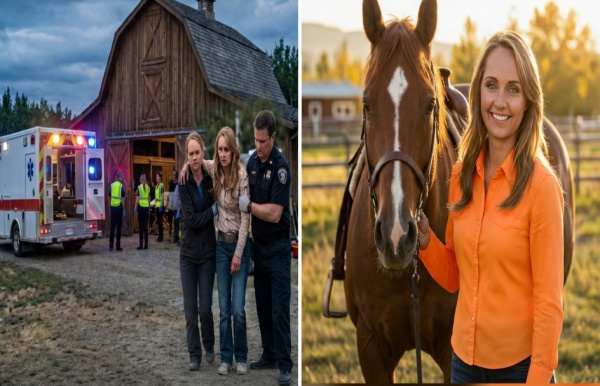
What if the story did not have to hurt so much to be unforgettable?
That is the question many longtime Heartland fans quietly carry in their hearts. Not because they stopped loving the show. Not because they forgot the beauty of the ranch, the horses, the family, the heartbreak, or the love stories that once made every episode feel like coming home. But because somewhere along the way, many viewers began to wonder if a story could still be powerful without breaking the audience again and again.
And maybe that is where a new kind of storytelling begins.
If Heartland were rewritten, I would not want it to become louder, darker, or more shocking just to chase attention. I would want it to become deeper. Softer. More meaningful. I would want the story to feel like a warm light coming through an old farmhouse window after a long storm. A story where the past is not erased, love is not replaced, and healing is not rushed simply because the next chapter needs to begin.
Because not every story has to be loud to be clear.
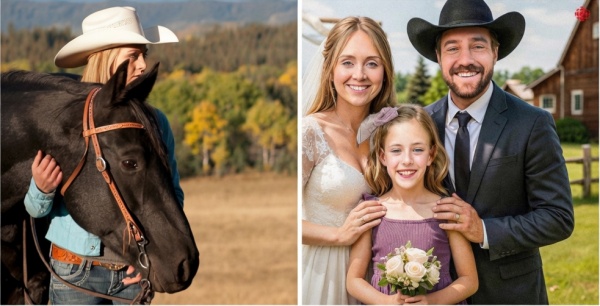
Some stories whisper, and somehow those are the ones we remember the longest. They stay with us because they feel honest. They remind us of the way real people heal: slowly, imperfectly, and often in silence. That is the kind of story I would want to see — one filled with emotional mystery, family loyalty, second chances, quiet romance, and the kind of hope that does not insult grief but gently walks beside it.
But here is the real question fans cannot stop asking.
What does it truly mean to move forward after losing something that once defined your whole heart? Is moving on supposed to mean packing away the photos, closing the door, and pretending the past no longer speaks? Or is real healing something far more beautiful — learning how to carry love with you while still allowing life to surprise you again?
That is where the rewritten story would become unforgettable.
In this new approach, the ranch would not simply be a place where things happen. It would become a living memory. Every fence, every barn door, every quiet morning with horses in the mist would carry emotional weight. The land would remember everything the characters tried to hide. The audience would feel that behind every peaceful sunrise, there might be an old secret waiting to return.
And maybe the story would begin with something incredibly simple.
A box found in the attic. A letter hidden inside an old jacket. A horse reacting strangely to a stranger at the gate. A photograph Amy thought she had lost years ago. Nothing explosive. Nothing forced. Just one quiet detail that makes the audience lean closer and ask, “Wait… what does this mean?”
That is the power of gentle storytelling.
It does not scream for attention. It invites curiosity. It does not throw tragedy at the viewer just to create emotion. It builds emotion slowly, one detail at a time, until the audience realizes they are already deeply invested. A quiet scene can become more powerful than a dramatic speech when it carries the weight of love, memory, and unfinished truth.
If I could rewrite this kind of Heartland-inspired story, I would start with Amy’s silence.
Not a broken silence. Not a cold silence. But the kind of silence that belongs to someone who has survived more than people realize. Amy would not need to explain her pain in every scene. Viewers would see it in the way she pauses before entering a room, the way she touches an old saddle, the way she smiles at her daughter but looks away before the tears come.
Because sometimes the strongest characters are not the ones who never cry.
They are the ones who keep showing up while carrying an invisible storm inside. That is the version of Amy many fans still want to see — not erased, not rushed, not forced into a new life before the old one has been honored. A woman who is still strong, still loving, still growing, but deeply human in the way she remembers.
And then comes the emotional hook that could change everything.
What if Amy discovers that someone from the past has been protecting a secret — not a cruel secret, but a tender one? Something connected to Ty. Something he never had the chance to say. Something that does not bring him back in a cheap or unrealistic way, but brings back the meaning of his love in a way that helps Amy finally breathe again.
That would be the kind of twist fans could feel, not just watch.
A powerful story does not always need a shocking villain. Sometimes the deepest twist is emotional. A truth no one expected. A memory misunderstood. A promise kept quietly for years. A letter written but never delivered. These are the moments that make people stop scrolling, keep reading, and feel like the story is speaking directly to their own heart.
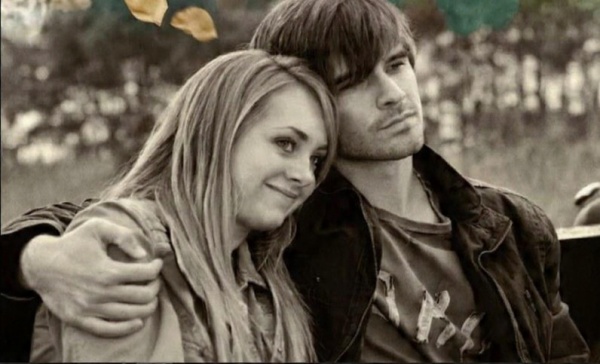
But this rewritten story would not live only in grief.
That would be too heavy, and life is never only one emotion. There would still be laughter at the ranch. There would still be family dinners, small arguments, horses breaking through tension, children asking questions adults are afraid to answer, and quiet humor in the middle of painful days. The beauty of a ranch family drama is that even sorrow can sit at the table with warmth.
And that warmth matters more than people think.
Fans do not return to a story only because of conflict. They return because they want to feel at home. They want to see a world where people still care enough to stay, forgive, argue, heal, and try again. A rewritten Heartland approach would understand that comfort is not boring. Comfort can be powerful when it is earned.
This is where Jack’s role would become even more important.
Every great family story needs someone who carries wisdom without needing to control everyone. Jack would become the emotional bridge between the past and the future. He would not simply give advice. He would notice things others miss. He would understand when Amy is pretending to be fine. He would know when the ranch itself feels different.
And maybe Jack would be the first to sense that something is coming.
Not through a dramatic prophecy or forced mystery, but through experience. He has lived long enough to know that the past rarely stays buried when the heart is not ready. One look at Amy. One strange visitor at the fence. One old memory returning at the wrong time. That would be enough for him to understand that the family is about to face something deeper than a normal ranch problem.
Then the story would open into a larger emotional mystery.
A stranger could arrive in town carrying a connection to Ty’s life before everyone fully knew him. Not someone designed to destroy the family. Not someone created only for drama. But someone with a story of their own — someone who brings a missing piece of the past and forces everyone to see love, loyalty, and memory in a new way.
And here is where the audience would be hooked.
The stranger does not reveal everything right away. They hesitate. They watch the ranch from a distance. They seem to know things they should not know. Amy feels unsettled but cannot explain why. Jack becomes cautious. Lou begins asking questions. And suddenly, the peaceful world of the ranch becomes filled with quiet tension.
But the emotional question would be bigger than the mystery.
The real question is not, “Who is this person?” The real question is, “What part of the past has Amy never been allowed to understand?” That is the kind of question that keeps readers and viewers invested. It is personal. It is emotional. It connects directly to grief, love, and the fear of reopening wounds that never fully healed.
In this rewritten version, Amy would not be forced to forget Ty.
That would be the most important rule. The story would never treat old love like an obstacle that must be removed. Instead, it would show that true love can remain part of someone’s life without preventing them from growing. That is a more mature, more respectful, and more emotionally honest way to tell the story.
Because moving forward does not mean leaving love behind.
It means learning how to carry it differently. Some days, love feels like pain. Other days, it feels like strength. Sometimes it returns through a memory, a song, a place, or the way a child asks about someone they barely got to know. A rewritten story would honor that complexity instead of simplifying it.
And that is exactly why fans would care.
Viewers are not only attached to characters. They are attached to what those characters represent. Ty represented loyalty, healing, redemption, and a love that felt earned. Amy and Ty’s story was powerful because it grew through pain, patience, mistakes, forgiveness, and devotion. To erase that too quickly would feel like erasing the emotional foundation many fans built their love for the show upon.
So instead of erasing the past, the new story would transform it.
Old memories would become keys. Old wounds would become doorways. Old promises would become the emotional map for Amy’s future. Every piece of the past would help build the next chapter, not block it. That is how a story can evolve without betraying what made people love it in the first place.
But of course, a story still needs tension.
The difference is that the tension would come from emotional truth, not artificial chaos. Amy might struggle with whether she is allowed to feel happiness again. Lou might believe the family needs to move forward more quickly. Jack might quietly disagree. A new character might enter Amy’s life, but instead of replacing anyone, he would challenge her to see herself beyond grief.
And that is where romance could become meaningful again.
Not rushed. Not forced. Not written as if the audience should instantly accept it. A new romance, if it ever happens, would have to earn its place slowly. It would begin with respect, not attraction. Trust, not chemistry alone. Shared silence, not dramatic declarations. The audience would need time to believe that this person understands the sacredness of Amy’s past.
Because the only love story worth telling after great loss is one that respects the love that came before.
That is the emotional rule many shows forget. Fans do not reject new beginnings because they hate change. They reject new beginnings when those beginnings feel like replacements. But when a story honors grief, respects memory, and allows trust to grow naturally, the audience can open their hearts too.
The rewritten story would also give Amy’s daughter a deeper emotional role.
Children often ask the questions adults avoid. In this new version, she might become the one who brings Ty’s memory back into daily life. She may ask about him at unexpected moments. She may find an old photo. She may wonder why adults get quiet when his name is spoken. Through her innocence, the family would be forced to talk about what they have buried.
And that could create some of the most powerful scenes in the entire story.
Imagine a child asking, “Was he funny?” or “Did he like this place?” or “Would he be proud of us?” Simple questions, but emotionally devastating. Those questions do not need dramatic music. They already carry the weight of a thousand memories. That is the kind of writing that makes audiences pause and feel.
This new approach would make the ranch feel alive again.
The horses would not just be background beauty. They would reflect the emotional state of the characters. A nervous horse could reveal tension before anyone speaks. A rescued horse could mirror Amy’s own healing. A difficult training session could become a metaphor for trust, patience, and letting go without giving up.
That is why ranch storytelling works so beautifully when done right.
The land, the animals, and the people all speak to each other. A broken fence is never just a broken fence. A storm is never just weather. A horse refusing to move is never just a training problem. Everything can carry meaning when the story is written with care.
And maybe the biggest change would be the pace.
Modern stories often rush too fast. They want a twist every few minutes, a shock every episode, a new conflict before the last wound has even closed. But this rewritten story would trust the audience more. It would allow scenes to breathe. It would let characters sit with emotion. It would understand that slow storytelling can be deeply addictive when every quiet moment has meaning.
The audience does not always need more noise.
Sometimes they need one powerful look across a barn. One unfinished sentence at dinner. One character walking away because the truth hurts too much. These moments create emotional suspense. They make viewers wonder what is being left unsaid. And often, what is unsaid becomes more gripping than what is spoken.
That is the kind of story that could become viral for the right reasons.
Not because it tricks people with fake drama, but because it gives them something to feel and discuss. Fans would debate the stranger’s secret. They would wonder if Amy is ready to open her heart. They would cry over old memories. They would share scenes that remind them of their own families, losses, and second chances.
And every great blog-worthy story needs a question people cannot resist answering.
Should Amy hold on to the past, or should she allow a new chapter to begin? Should the family protect her from painful truths, or trust her enough to reveal them? Can love remain loyal to the dead while still making room for the living? These questions are not just plot points. They are emotional invitations.
That is what makes a story unforgettable.
People remember stories that ask questions they have asked themselves. They remember characters who feel like real people, not plot machines. They remember moments that make them think of someone they loved, someone they lost, or someone they never had the courage to forgive. A rewritten Heartland approach would lean into that kind of emotional honesty.
But the story would still need hope.
Not cheap hope. Not easy hope. Real hope. The kind that arrives slowly after hard conversations, tearful memories, and the courage to face what was buried. Hope might come through a repaired relationship. A horse finally trusting again. A family dinner where Ty’s name is spoken without everyone falling apart. A new sunrise that feels different because something inside Amy has finally shifted.
And that hope would be the heart of the new story.
The goal would not be to make Amy forget. The goal would be to help her live fully while remembering with love instead of only pain. That is a powerful emotional arc. It respects the audience. It respects the character. And it gives the story a chance to grow without losing its soul.
In this version, family would remain the center.
Romance may pull viewers in, mystery may keep them curious, but family is what makes the story last. The ranch family would not always agree. They would make mistakes. They would say the wrong things. They would hurt each other while trying to protect each other. But underneath every conflict would be one truth: they stay.
And staying is one of the most emotional things a character can do.
Staying when someone is grieving. Staying when the house feels heavy. Staying when the past returns with questions no one wants to answer. Staying when love becomes complicated. That kind of loyalty is quieter than a dramatic rescue scene, but it can be even more powerful.
This is why a gentler rewrite could actually be more gripping.
Because gentle does not mean weak. Gentle can be intense. Gentle can be mysterious. Gentle can break your heart with one sentence. A soft story can still have secrets, tension, romance, conflict, and unforgettable twists. The difference is that every twist would serve the emotion, not the other way around.
And maybe that is what audiences are hungry for now.
In a world full of loud content, fast edits, shocking headlines, and endless drama, a warm emotional story can feel like a rare gift. People want something that makes them feel safe but still curious. Comforted but still surprised. Seen but still entertained. A rewritten Heartland-style story could offer exactly that.
So if I were writing this new chapter, I would make one promise from the beginning.
The past will matter. Every love will be honored. Every wound will have a reason. Every new beginning will be earned. No character will be pushed forward just because the plot demands it. They will move when their hearts are ready — and sometimes, they will stumble before they stand.
That promise would change everything.
It would tell fans that their memories matter too. It would say, “We know why you loved this story. We know what broke your heart. We are not here to erase it. We are here to build something meaningful from it.” That kind of respect can bring an audience back, even after disappointment.
And the final message would be simple but powerful.
Life after loss is not about becoming someone new overnight. It is about discovering that the person you were, the love you carried, and the pain you survived can all become part of a future you never expected. That is not forgetting. That is healing.
Maybe that is the story people have been waiting for.
A story where the ranch still feels like home. Where love is not disposable. Where grief is not rushed. Where family is messy but loyal. Where mystery grows from memory. Where romance blooms carefully. Where every quiet moment might be hiding a truth that changes everything.
And maybe the most unforgettable version of this story would begin with one quiet sentence.
“Some loves do not end. They simply change the way they live inside us.”
From there, the story could open like a door. A door to the past. A door to healing. A door to a new chapter that does not betray the old one. And once that door opens, fans would not just want to watch.
They would want to follow.
They would want to feel.
They would want to know what happens next.
Conclusion: A New Heartland-Style Story Could Still Heal the Audience
The most powerful stories are not always the ones that shock us first.
Sometimes they are the ones that understand us slowly. They know that love does not disappear just because life moves forward. They know that grief does not follow a clean timeline. They know that family can be both painful and beautiful. And they know that healing is not a single moment — it is a journey.
If Heartland were rewritten with this kind of emotional care, it could become something deeply unforgettable.
Not a copy of the past. Not a rejection of the future. But a softer, richer, more meaningful bridge between both. A story where fans could grieve, hope, remember, and believe again.
Because in the end, not everything has to be loud to be clear.
Sometimes the quietest story is the one that stays in the heart forever.
