Lessons from 16 Seasons of Heartland
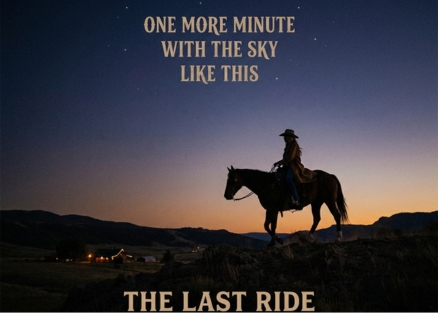
There is a specific kind of magic that exists in a place where the blue sky seems to go on forever. For sixteen seasons, the Bartlett-Fleming ranch—a sprawling sanctuary in the foothills of the Rockies—has been more than just a setting for a television drama. It has functioned as a multi-generational hearth, a home that has been in the same family for six generations.
To the casual observer, Heartland is a show about horses. But to those who have walked the gravel paths alongside Amy, Jack, and Lou, it is a masterclass in the quiet endurance of the human spirit. It is a story about the smell of the Alberta air after a long absence and the way a porch swing can offer a view not just of the mountains, but of the future. After nearly two decades, the show’s power lies in its surprisingly deep wisdom regarding resilience, the complexity of kinship, and the radical, transformative art of truly listening.
1. The Power of Listening Over “Whispering”
In the equestrian world, the “horse whisperer” is a figure of legend—a person who possesses a mystical, almost ego-driven command over animals. But early in the series, Amy Fleming offers a vital re-allocation of this locus of control. Reflecting on her mother’s legendary gift, she clarifies:
“My mother didn’t whisper to horses she listened to them.”
This distinction is more than semantics; it is a shift from the ego of the “trainer” to the empathy of the “partner.” Western culture often obsesses over “whispering”—the secret knowledge, the hidden command, the performance of control. Heartland suggests a counter-narrative: that true connection requires the vulnerability to set aside our own agenda and prioritize the “other.” By making a personal connection and seeking to understand what is being communicated without words, we move from mastery to partnership. Whether with a traumatized stallion or a difficult spouse, the lesson remains: we cannot help what we refuse to hear.
2. Redemption is a Slow Walk, Not a Gallop
In an era of instant gratification, Heartland argues that the most meaningful personal transformations occur at a glacial pace. We see this most poignantly in the parallel journeys of Ty Borden and Tim Fleming.
Ty arrives as a young man from reform school, guarded and volatile. Tim, Amy’s father, returns to the ranch as a man Jack Bartlett once wanted off his property—a candidate for what Tim himself calls the “Rye Whiskey Hall of Shame.” Tim describes his younger self as a “real SOB… pushy, impatient, and he’s got an ego the size of the Alberta sky.”
Their redemption isn’t a single “gallop” toward a finish line; it is a slow, decade-long walk. It is built on Jack’s fundamental philosophy:
“It takes a lot of guts to be a Rodeo Cowboy… but that doesn’t mean much to me when you compare it to the character it takes for a man to own up to his mistakes. That’s the true measure of a man.”
The show teaches us that while the past may be a landscape we can never truly leave, we can learn to integrate it with patience. Redemption is found in the character required to “own up,” day after day, until the “Rye Whiskey Hall of Shame” is a distant memory in the rearview mirror.
3. Family is Formed by Choice and “Stones”
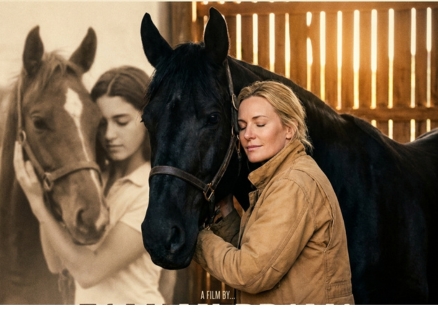
While the ranch is anchored by six generations of bloodline, it reveals that “family” is less a static noun and more an active verb. The ranch acts as a gravitational force, pulling in those who need a sanctuary—from runaway foster children to wandering souls looking for a purpose.
This is best exemplified by Georgie’s journey from a defensive runaway to a legally adopted daughter and champion rider. The Bartlett-Fleming family cements these non-biological ties through physical ritual, specifically the “Stone ceremony.” The dialogue during this tradition is deceptively simple but profoundly inclusive:
“This is my stone and this one over here is mine… This will be your stone right between ours.”
By placing the “Shane Stone” or the “Ty Stone” into the earth of the ranch, the family acknowledges that belonging is an intentional act. It proves that a family is not just who you are born to, but who you choose to stand beside when the work gets hard and the trails get rough.
4. The Radical Honesty of Grief
The departure and eventual death of Ty Borden was a tectonic shift for the series, but the way Heartland handled the aftermath provided some of its most intellectually deep moments. It refused the Hollywood trope of “moving on,” opting instead for a radical honesty about the non-linear nature of mourning.
Jack Bartlett, who carried his own long-standing grief for his late wife Lindy, provided the necessary perspective for a shattered Amy. He acknowledged that grief is a territory with no map:
“Nobody really knows how to grieve, Amy. It’s different for everyone… anyone who says they know how to grieve might just have a piece of their heart missing.”
Through this, we learn that the goal of grieving isn’t to reach a state of “getting over it,” but rather to find ways to carry the memory of the lost into the “Here and Now.” It is about finding the “magic” again in the midst of a heart that feels permanently changed.
5. Legacy is Built in the “Here and Now”
The culmination of Jack Bartlett’s journey occurs during his induction into the Foothills Cowboy Hall of Fame. For a man who spent his life in the shadow of rodeo trophies and past glories, the induction brought a startling realization. He concluded that his “True Glory Days” weren’t found in the dusty archives of his youth, but in the present vitality of the ranch.
Legacy in Heartland is a living, breathing thing. It is seen in the physical labor of building for the future—like the house and the swing Amy and Ty built on the land Jack gifted them. From that swing, they could see “a view of the future,” provided they were on the same page.
It reminds us that a legacy isn’t something we leave behind when we die; it is the environment we cultivate while we are alive. It is maintained through shared effort, daily chores, and the commitment to stay when the world tells us to move fast.
——————————————————————————–
The Horizon Ahead
The enduring appeal of Heartland lies in its insistence on patience in an impatient world. It asks us: How can we apply the philosophy of the ranch to our own lives? Perhaps it starts by slowing down the “gallop” of our own expectations and learning the art of listening to those we love.
As Georgie reflected in her valedictorian speech, life is defined by the obstacles we face, but we find our greatest strength when we realize those obstacles aren’t meant to be tackled alone. In her uniquely spirited way, she reminded her peers that with the right people by your side, you can “obliterate any obstacle like a photon torpedo taken on a Klingon bird of prey.”
In the end, the “Heartland way” is about the courage to stay, the humility to listen, and the quiet, persistent strength required to build a life that lasts for six generations and beyond.
