Three weeks before our wedding, my fiancé walked away with my best friend and left me to cancel the life we had planned. For years, I thought seeing them again would break me all over again.
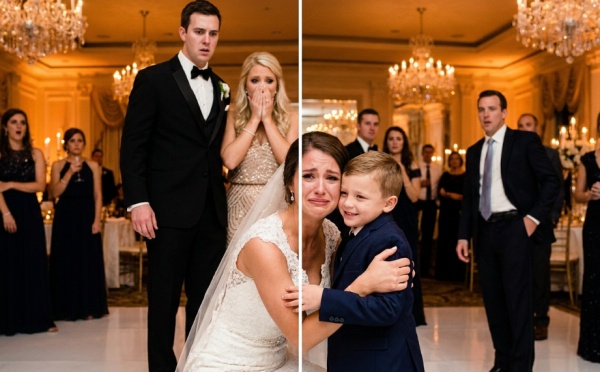
Then, at our college reunion, he mocked me for being unmarried and acted like I was the one who had lost. But before I could answer, a little boy ran across the room yelling “Mommy!” — and suddenly, everyone saw the truth.
Part 1: The Wedding That Never Happened
Three weeks before my wedding, I found my best friend’s earring in my fiancé’s truck.
It was small, gold, shaped like a tiny crescent moon. I knew it belonged to Lauren because I had given her the pair for her twenty-sixth birthday, wrapped in white tissue paper with a card that said, To my moon-sister, the girl who always lights the dark places.
At the time, I thought the phrase was sweet.
Later, I realized some people do not light the dark places. They hide in them.
My name is Hannah Miller, and seven years ago, I was supposed to marry Ethan Cole in a white chapel outside Franklin, Tennessee. We had booked the venue, ordered the flowers, mailed the invitations, and paid the deposit on a honeymoon cabin in the Smoky Mountains. My dress hung in my mother’s guest room closet, zipped inside a garment bag like a promise waiting for breath.
Ethan and I had been together for four years. He was handsome in the easy, Tennessee-boy way people noticed before he even spoke. Dark blond hair, blue eyes, a charming smile, and the kind of confidence that made waitresses forgive slow tips and older women call him “sweetheart.”
Lauren had been my best friend since freshman year of college at Middle Tennessee State University. We had survived bad dorm food, final exams, terrible boyfriends, and one disastrous spring break trip to Panama City Beach where our car broke down outside a gas station at midnight. She knew my coffee order, my childhood insecurities, and the exact shade of lipstick I wore when I needed courage.
So when I found her earring in Ethan’s truck, my first instinct was not suspicion.
It was explanation.
Maybe she had ridden with him to help with wedding errands. Maybe it had fallen from her purse during a group dinner. Maybe there was a reasonable, harmless reason why something that belonged to my best friend was tucked between the passenger seat and the center console of my fiancé’s truck.
That is how betrayal survives at first.
It counts on your love to defend it.
I held the earring in my palm while Ethan stood outside the gas station pumping fuel. We were on our way to meet the caterer, and I remember the smell of gasoline, hot asphalt, and the vanilla air freshener hanging from his rearview mirror. My hands were cold even though it was late August and ninety-one degrees outside.
When he got back in, I asked, “Why is Lauren’s earring in your truck?”
His face changed so quickly I almost missed it.
A flicker.
Then charm.
“What?”
I held it up.
He laughed, too lightly. “How would I know? Maybe she dropped it when we all went to dinner last week.”
“She rode with Melissa and Brian last week.”
His smile tightened.
“Hannah, we’re three weeks from the wedding. Are we really doing this?”
That was Ethan’s gift. He could make your question sound like an attack before he ever answered it.
“I’m just asking,” I said.
“And I’m just saying you’re stressed.”
Stressed.
That became the word he used for everything I noticed.
When he was late coming home: I was stressed.
When Lauren stopped answering my texts as quickly: I was stressed.
When I saw Ethan’s phone light up with her name at 1:12 a.m.: I was stressed.
When I asked why he suddenly cared so much about helping Lauren move into her new apartment: I was stressed.
For two weeks, I tried to believe him because the alternative was too ugly to hold.
Then, nine days before our wedding, Lauren came to my apartment.
She wore a pale blue sundress and the other crescent moon earring. Her eyes were red, but her makeup was perfect. That detail stayed with me. She had cried carefully.
“Hannah,” she said, standing in my doorway, “we need to talk.”
My stomach turned.
Behind her, in the parking lot, Ethan’s truck idled near the curb.
I already knew before she said another word.
Still, I let her in.
We sat at my kitchen table, the same table where we had addressed wedding invitations together. The same table where she had helped me choose napkin colors. The same table where she had held up a champagne flute and toasted, “To forever.”
Lauren folded her hands.
“I never meant for this to happen,” she whispered.
People say that when they want forgiveness without accountability.
I stared at her. “What happened?”
She began crying then. Not loudly. Not dramatically. Softly, like she was the wounded one.
“Ethan and I fell in love.”
For a moment, I did not understand the sentence.
It was too clean.
Too polished.
Too ridiculous.
“You what?”
She looked down. “We tried to stop.”
“No, you didn’t.”
Her head snapped up.
I had never spoken to her like that before. I had always been the gentler friend, the one who smoothed awkward moments and apologized first even when I was not wrong. But something in me cracked open at the sight of her sitting in my kitchen wearing my earring and my betrayal at the same time.
“You didn’t try to stop,” I said. “You tried not to get caught.”
Her face crumpled.
Then Ethan walked in.
He did not knock.
That hurt almost as much as the affair. The way he entered my apartment like he still had the right.
“Hannah,” he said, “don’t be cruel.”
Cruel.
I looked at him, my fiancé, the man who had chosen our first dance song, tasted cake with me, held my hand during premarital counseling, and slept beside my wedding vows while betraying every one of them.
“You brought her here?” I asked.
He exhaled like I was exhausting him.
“We didn’t want you to hear it from someone else.”
I almost laughed.
“How thoughtful.”
Lauren wiped her eyes. “I’m so sorry.”
I looked at her. “Are you still coming to the wedding?”
She flinched.
Ethan’s jaw tightened. “There isn’t going to be a wedding.”
The room went silent.
Outside, a dog barked somewhere in the apartment complex. My refrigerator hummed. My phone sat on the table beside a list of final wedding payments.
“No,” I said quietly.
Ethan looked relieved. He thought I meant acceptance.
I stood.
“No,” I repeated. “You do not get to stand in my kitchen and cancel my wedding like you’re rescheduling a dentist appointment.”
“Hannah—”
“You will leave.”
His face hardened. “Don’t make this ugly.”
I looked at Lauren.
Then back at him.
“You made it ugly. I’m just no longer decorating it.”
That was the first time I saw Ethan truly angry with me.
Not because he had hurt me.
Because I had stopped making his choices comfortable.
They left together.
I stood at the window and watched Lauren climb into his truck. She looked back once, crying like a woman being exiled instead of one leaving with another woman’s fiancé.
That night, I called my mother.
I said only three words.
“He chose Lauren.”
My mother did not ask questions.
She said, “I’m coming.”
By morning, the phone calls began.
Venue. Caterer. Florist. Photographer. Guests. Family. Friends.
There is no clean way to cancel a wedding after invitations have gone out. Every call reopens the wound. Every vendor asks for a reason. Every guest says, “Oh my goodness, what happened?” in a voice that is half concern, half hunger.
My father lost deposits he had saved for years to pay.
My mother returned monogrammed towels to a department store clerk who said, “Oh no, honey,” and patted her hand.
I took my wedding dress to a consignment shop in Nashville and cried in the parking lot for forty minutes before I could carry it inside.
But the worst part was not the money.
It was the silence after.
Ethan did not call.
Lauren sent one message.
I hope someday you understand that love isn’t always simple.
I blocked her so quickly my thumb hurt.
Two months later, they posted a picture together at a vineyard outside Asheville.
Six months later, they were engaged.
One year later, they got married in a garden ceremony with white roses and live violin music.
I knew because people sent me screenshots.
People always think they are helping when they deliver the knife gently.
I did not go online for three days after seeing the photos.
Then I got up.
Because heartbreak can take your appetite, your sleep, your trust, and your plans.
But it cannot pay your electric bill.
So I went back to work.
Part 2: The Years Nobody Saw
At the time Ethan left, I was working as an administrative assistant at a dental office in Murfreesboro.
It was not my dream job, but it paid $18 an hour and came with decent insurance. I answered phones, scheduled cleanings, handled billing questions, and smiled at patients who hated root canals almost as much as I hated being asked, “So, when’s the big day?”
For months, I kept my engagement ring in a small ceramic dish beside my bed.
I do not know why.
Maybe because taking it to sell felt final. Maybe because part of me still expected Ethan to wake up from whatever selfish dream he had entered and come back apologizing. Maybe because grief is not logical, and sometimes you keep objects because letting go of metal feels harder than letting go of a person.
Finally, one Saturday, my mother drove me to a jeweler in Franklin.
The man behind the counter examined the ring with a loupe and offered me far less than Ethan had claimed it was worth. That seemed fitting.
I sold it anyway.
With that money, I enrolled in night classes for medical billing and healthcare administration at a community college outside Nashville.
It was not a dramatic reinvention.
I did not move to New York, dye my hair red, or meet a handsome stranger in a coffee shop by chapter three.
I studied insurance codes.
That is what rebuilding looked like for me.
CPT codes. Claim forms. Revenue cycles. Patient privacy rules. Spreadsheets. Late nights. Coffee from gas stations. Flashcards in my purse. Crying in my car after exams because I was too tired to drive home but too stubborn to quit.
My mother told me once, “You don’t have to prove anything to Ethan.”
“I’m not,” I said.
But at first, that was not entirely true.
Some part of me wanted him to hear I was doing well. I wanted Lauren to know I had not disappeared into the tragic role she needed me to play. I wanted every person who whispered about me to see me walking taller.
Then, slowly, the proving changed.
It stopped being about them.
It became about me.
I finished the program. I got a new job as an insurance coordinator for a pediatric clinic in Brentwood. The pay was better, the work was busier, and for the first time in a long time, I felt useful in a way that did not depend on being loved.
The clinic changed me.
Every day, I saw families in all forms.
Single mothers holding toddlers and clipboards. Grandparents raising grandkids. Foster parents learning medication schedules. Fathers who showed up in work boots, mothers who came straight from night shifts, children with chronic illnesses, children with scraped knees, children who were scared of shots but brave about everything else.
That was where I met Jonah.
He was not my son at first.
He was just a little boy in dinosaur sneakers sitting in the waiting room with a social worker, swinging his legs and refusing to look at anyone. He was four years old, though small enough to seem younger. His hair was dark, his eyes serious, and he carried a stuffed rabbit with one ear nearly torn off.
I remember the first time he spoke to me.
I had come into the waiting room to confirm paperwork, and he stared at the sticker basket on the counter.
“Do you have blue ones?” he asked.
I smiled. “Blue dinosaurs or blue stars?”
He thought about it.
“Both.”
“A man with standards,” I said.
He did not smile, but he took both stickers.
Over the next year, Jonah came to the clinic often. He had asthma, allergies, and a history adults discussed in low voices. His mother was struggling with addiction and unstable housing. His father was not involved. His grandmother cared for him when she could, but her health was failing.
I did not know all of that at first.
I only knew he learned my name.
“Miss Hannah,” he would say when he walked in, holding up his rabbit. “He needs a sticker too.”
So I gave stickers to a stuffed rabbit.
There are worse things to do with your life.
Around that time, I began volunteering on weekends with a nonprofit that supported foster families. It started as helping organize donation closets and paperwork drives. Then I trained as a respite caregiver, someone approved to provide short-term care when foster parents needed help.
My mother worried.
“You’ve been through enough,” she said.
I understood what she meant. She had watched me crawl through one kind of grief and feared I was walking toward another.
But I told her, “Maybe being hurt is not a reason to close the door. Maybe it’s why I know how to leave a light on.”
Jonah came into my home for the first time on a rainy Friday evening.
It was supposed to be for one weekend.
His grandmother had been hospitalized, and the foster family scheduled to take him had an emergency. The social worker called me at 6:15 p.m. and asked if I could keep him until Monday.
I said yes before fear could talk me out of it.
He arrived with one backpack, two inhalers, three dinosaur shirts, and the rabbit.
He stood in my living room and looked around like he was trying to decide whether the walls were trustworthy.
“Where do I sleep?” he asked.
I showed him the small guest room I had prepared for respite care. Blue quilt. Nightlight. Books on the shelf. A plastic bin of toys donated by my church.
He placed the rabbit on the pillow.
Then he looked at me and asked, “Do people leave here?”
My heart broke so quietly I almost missed it.
“Sometimes,” I said, because children deserve honesty. “But not without telling you. And tonight, you are safe.”
He nodded like that was all the contract he needed.
Monday became Wednesday.
Wednesday became “just until the court hearing.”
The court hearing became a longer placement.
A longer placement became six months.
By then, Jonah knew which cabinet held the cereal, which blanket belonged on the couch, and that I sang badly while washing dishes. He corrected my dinosaur facts. He hated green beans. He loved pancakes with chocolate chips. He had nightmares and apologized after them, as if fear were misbehavior.
The first time he called me Mommy, he was sick.
It was 2:00 in the morning, and I was sitting beside his bed while his breathing rattled from a cold that had settled badly in his chest. We had already used his inhaler and spoken with the nurse line. I was watching him carefully, ready to drive to the ER if anything worsened.
He reached for my hand in the dark.
“Mommy, don’t go,” he whispered.
I froze.
Then I leaned closer and brushed his hair from his forehead.
“I’m right here,” I said.
He fell asleep holding two of my fingers.
I cried silently beside his bed until sunrise.
Not because I had been given something.
Because I understood the weight of what he had risked asking.
The adoption took time.
Everything involving children and courts takes time because it should. There were hearings, evaluations, visits, paperwork, delays, and painful conversations about birth family, rights, safety, and permanence. I learned to respect the process even when it broke my heart with waiting.
When Jonah was six, the adoption became final.
The judge let him bang the gavel.
He wore a navy blazer, dinosaur socks, and a smile so wide the bailiff laughed. My parents were there. My coworkers were there. The social worker cried harder than anyone.
Afterward, we went for pancakes because Jonah said official families needed syrup.
That was the day I stopped thinking of my life as what happened after Ethan.
It became what happened because I kept going.
Part 3: The Reunion Invitation
The reunion invitation arrived in early October.
MTSU Class of 2016 — Seven-Year Reunion Weekend
Technically, it was not a proper ten-year reunion, but our alumni group had decided seven years was long enough to feel nostalgic and short enough that people still cared about looking impressive. The event would be held at a hotel ballroom in Nashville, with dinner, music, and a silent auction for a scholarship fund.
At first, I deleted the email.
Then Melissa called me.
Melissa had been my roommate after Lauren moved off campus sophomore year. She was practical, loyal, and allergic to nonsense.
“You’re going,” she said.
“I am not.”
“You are.”
“Why would I voluntarily spend money to stand in a room with people who watched my canceled wedding become group chat entertainment?”
“Because you look amazing, your job is great, your son is adorable, and Lauren’s highlights are tragic.”
“Melissa.”
“I said what I said.”
I laughed despite myself.
The truth was, I had not seen Ethan or Lauren in person since the day they left my apartment together. Nashville is big enough to avoid people when everyone cooperates. Social media had told me enough.
Their marriage looked glossy at first.
Beach trips. Matching Christmas pajamas. Anniversary captions. A new house outside Brentwood with a kitchen Lauren described as “a dream come true.”
Then the posts changed.
Fewer photos of Ethan. More quotes about growth. A vague caption about “choosing peace.” No children, though I knew from mutual friends they had tried for years. I took no pleasure in that. Pain is not justice just because it lands near someone who hurt you.
I had heard they were still together, though not happily.
That was not my business.
Still, the thought of walking into a ballroom where they might stand made my stomach tighten.
Jonah found me staring at the invitation on my laptop.
“What’s that?” he asked.
“A college reunion.”
“What’s college?”
“School for grown-ups who think ramen noodles count as dinner.”
He nodded seriously.
“Are you going?”
“I don’t know.”
“Will there be cake?”
“Probably.”
“Then you should go.”
That settled nothing, but it made me smile.
Two weeks later, I bought a dress.
Not for Ethan.
Not for Lauren.
For me.
It was deep green, simple, fitted at the waist, with sleeves that made me feel elegant instead of exposed. I wore low heels because I was thirty-three, wiser than my twenty-six-year-old self, and no longer willing to suffer for shoes.
My mother came over the night of the reunion to watch Jonah.
He was seven now, missing one front tooth and deeply committed to becoming either a paleontologist or a professional pancake critic. He lay on the living room rug drawing a T. rex wearing sunglasses while my mother helped me fasten a bracelet.
“You don’t have to go,” she said softly.
“I know.”
“If you see them, you can leave.”
“I know that too.”
She looked at me in the mirror.
“Then why are you going?”
I thought about it.
“Because I’m tired of letting old pain decide which rooms I’m allowed to enter.”
My mother’s eyes filled.
Jonah looked up from his drawing.
“Mommy, are you going to be brave?”
I turned around.
His little face was serious.
“I think so.”
He considered this, then stood and ran to his backpack. He came back holding a small plastic dinosaur, green with chipped paint on its tail.
“You can take Rex,” he said. “He’s good at biting bad guys.”
My mother made a sound that was half laugh, half sob.
I knelt in front of him.
“I won’t need biting,” I said. “But I will take him for courage.”
Jonah placed Rex in my clutch with solemn importance.
“Text me if there’s cake,” he said.
“I will.”
The reunion was held at a hotel near downtown Nashville, not far from Broadway but far enough that nobody had to shout over bachelorette parties on pedal taverns. The ballroom had warm lighting, round tables with navy tablecloths, and a photo backdrop with our class year printed in gold.
For the first thirty minutes, I was fine.
Better than fine.
I hugged Melissa. I talked to old classmates. I accepted compliments without deflecting them. I told people I worked in pediatric healthcare administration and had a son named Jonah. Some people seemed surprised by the word son, but most smiled and asked polite questions.
Then I saw Lauren.
She stood near the bar in a black dress, holding a glass of white wine. She looked older, not badly, just differently. Her face was thinner. Her smile was careful. When she saw me, the glass paused halfway to her mouth.
For one second, neither of us moved.
Then Ethan appeared beside her.
He looked almost the same at first glance. Same blue eyes, same charming smile, same posture of a man expecting the room to make space for him. But there was something heavier around his mouth now. Something restless.
His gaze landed on me.
Recognition.
Then surprise.
Then something that might have been annoyance.
Melissa leaned close. “Do you want to leave?”
I took a breath.
“No.”
Ethan said something to Lauren, then walked toward me.
Of course he did.
Men like Ethan cannot stand a story where they are no longer the main character.
“Hannah Miller,” he said, opening his arms as if we were old friends.
I did not step into the hug.
“Ethan.”
His arms lowered awkwardly.
“Wow,” he said, looking me over. “You look… different.”
“I hope so. It’s been seven years.”
He laughed.
Lauren hovered a few feet behind him, not joining us but not leaving either.
“I heard you’re still in Nashville,” Ethan said.
“Brentwood now.”
“Fancy.”
“Not really.”
He smiled with the old edge I remembered.
“So what are you doing these days?”
“I work in healthcare administration.”
“Still at that clinic?”
“I oversee operations for three pediatric practices.”
His smile flickered.
“Good for you.”
People say that when they mean the opposite.
Then he looked at my left hand.
No ring.
His smile sharpened.
“And no husband?”
Melissa stiffened beside me.
I felt the old Hannah stir.
The one who would have laughed softly, changed the subject, protected him from his own ugliness.
But she did not get to answer anymore.
“No husband,” I said calmly.
Ethan tilted his head.
“I always figured you’d be married with, what, three kids by now? You were so into the whole family thing.”
Lauren whispered, “Ethan.”
He ignored her.
Maybe he had drunk too much. Maybe seeing me standing there unbroken made him need to reopen the wound. Maybe some people cannot feel successful unless they can prove someone else stayed small.
“I guess life doesn’t always turn out like the Pinterest board,” he said.
The words were not loud, but a few people nearby heard.
Melissa’s face went red.
I smiled.
Not because it was funny.
Because for the first time in seven years, Ethan’s cruelty looked cheap.
“No,” I said. “Sometimes it turns out better.”
He laughed once.
“Better?” he repeated.
Then, before I could answer, the ballroom doors opened.
A small voice shouted across the room.
“Mommy!”
Every head turned.
Jonah came running in wearing a button-down shirt, sneakers, and a dinosaur backpack bouncing against his shoulders. My mother hurried behind him, breathless and apologetic, holding her phone.
“Mommy!” he called again.
I dropped to one knee just in time for him to throw himself into my arms.
Part 4: The Little Boy With the Dinosaur Backpack
Jonah hugged me like the ballroom had disappeared.
For one beautiful second, there was no Ethan, no Lauren, no reunion, no old betrayal standing five feet away in a gray suit. There was only my son’s arms around my neck and the familiar smell of his shampoo.
“Baby, what happened?” I asked.
He pulled back, eyes wide.
“Grandma said I could come because you left your phone in her car, and I told her that was not safe because what if there was cake?”
My mother arrived behind him, cheeks flushed.
“I’m so sorry,” she said. “You left your phone on the seat, and he insisted this was an emergency.”
“It was,” Jonah said seriously. “Cake emergency.”
A few people laughed.
The tension in the room shifted.
I stood, keeping one hand on Jonah’s shoulder.
Ethan stared at him.
Then at me.
Then back at him.
“Mommy?” he said.
Jonah looked up at Ethan with the direct suspicion of a child who could sense adult weirdness but had not yet learned to pretend otherwise.
“Yes,” he said. “That’s my mom.”
The words landed in me the way they always did.
Warm. Heavy. Sacred.
Lauren’s face changed.
Something like pain crossed it.
Ethan blinked, confused.
“You have a kid?”
I looked at him.
“I have a son.”
Jonah leaned against my side.
He was not shy exactly, but he was observant. He noticed the way Ethan spoke, the way the adults had gone quiet, the way my hand tightened slightly on his shoulder.
“Who are you?” Jonah asked him.
Ethan opened his mouth.
Before he could answer, Melissa said brightly, “Nobody important.”
I nearly choked.
My mother covered her mouth.
Ethan’s face hardened.
“I’m an old friend of your mom’s,” he said.
Jonah looked at me for confirmation.
I did not lie.
“He’s someone I knew a long time ago.”
That answer satisfied Jonah enough.
He unzipped his backpack and pulled out my phone.
“You also forgot Rex,” he said.
I opened my clutch and showed him the tiny green dinosaur.
“Nope. Rex came with me.”
Jonah sighed with relief.
“Good. He’s brave.”
I kissed the top of his head.
“Yes, he is.”
The people nearby began drifting back into conversations, though not far enough to stop listening. Reunions are like that. Everyone pretends not to watch while watching with their whole body.
Ethan recovered first.
“So,” he said slowly, “you got married?”
“No.”
His eyebrows rose.
The implication hung there, ugly and old-fashioned.
I felt Melissa shift beside me, ready to strike verbally.
But I answered calmly.
“I adopted Jonah.”
My son looked up. “The judge let me hit the hammer.”
“The gavel,” I corrected.
“It was awesome.”
Someone nearby laughed warmly.
Lauren stepped closer then.
For the first time, she looked directly at Jonah.
“He’s beautiful,” she said softly.
“Thanks,” I said.
Her voice trembled. “How old is he?”
“Seven.”
The same number of years since the wedding that never happened.
Ethan noticed.
I saw it happen in his face. A quick calculation. A flicker of discomfort.
But Jonah spared us all whatever ridiculous thought might have formed.
“I’m almost seven and a half,” he said.
“Very important,” I added.
Ethan looked at me, and for once, he seemed unsure where to place his arrogance.
“You never posted about him,” he said.
“I don’t post much about my child online.”
It was a simple sentence, but it exposed another difference between us.
Ethan had always lived for appearances.
I had learned to live for what was real.
Jonah tugged my hand.
“Mommy, is there cake?”
“Yes,” I said. “There is cake.”
“Can I have some?”
I looked at my mother.
She shrugged. “At this point, why not?”
So I took my son to the dessert table.
The room followed us with its eyes.
Jonah chose a slice of vanilla cake with strawberries. I helped him carry it to a small table near the wall, away from the bar. My mother sat beside him and pulled napkins from her purse because mothers and grandmothers are always prepared in ways governments should study.
Melissa came with us.
She leaned close and whispered, “That was the greatest entrance in reunion history.”
I laughed for real then.
Across the room, Ethan and Lauren argued quietly.
I could not hear the words, but I recognized the shape. Lauren’s shoulders tense. Ethan’s jaw tight. His hand cutting through the air like he was explaining why his cruelty was someone else’s fault.
Jonah ate cake.
“This is good,” he said.
“Worth the emergency?”
He nodded solemnly.
“Very worth it.”
I looked at him and felt the old wound inside me loosen.
For years, part of me had feared that seeing Ethan and Lauren would make me feel like the abandoned bride again. The woman left with canceled flowers, returned gifts, and pitying phone calls. The woman whose future had been stolen three weeks before she could walk down the aisle.
But sitting there beside Jonah, I finally understood something.
Ethan had not stolen my future.
He had only removed himself from it.
And thank God he had.
Because the life I had now required a different version of me. One who could sit beside hospital beds, adoption hearings, preschool meetings, and late-night asthma treatments. One who could love without being chosen first by a man. One who knew family was not always born from vows at an altar.
Sometimes family arrived with dinosaur sneakers and a stuffed rabbit.
Sometimes family called you Mommy before the paperwork was final, and your whole heart rearranged itself to answer.
Lauren approached while Jonah was finishing his cake.
She came alone.
Ethan stayed near the bar, watching us with an expression I could not read.
“Hannah,” she said.
Melissa immediately stood.
I touched her arm.
“It’s okay.”
Melissa looked unconvinced but stepped back.
Lauren looked at Jonah, then at me.
“Can we talk for a minute?”
I glanced at my son.
He was busy trying to convince my mother that strawberry counted as a vegetable.
“Here is fine,” I said.
Lauren swallowed.
“I owe you an apology.”
I almost laughed.
Not because apologies are funny.
Because seven years is a long time to carry a sentence that should have arrived in the first week.
“Yes,” I said. “You do.”
Her eyes filled.
“I was selfish. And jealous. And cruel. I told myself Ethan and I had something special because that made it easier not to look at what we were doing to you.”
I said nothing.
She continued.
“I lost you, and I pretended it was because you couldn’t understand love. But the truth is, I couldn’t understand loyalty.”
The words were better than I expected.
Still, they did not erase anything.
“Thank you for saying that,” I said.
She nodded, wiping under one eye carefully.
“I don’t expect forgiveness.”
“That’s good,” I said gently. “Because I don’t know if I have it for you.”
She accepted that.
For the first time, I respected her a little.
Then she looked toward Ethan.
“He still talks about you.”
I frowned.
“What?”
“Not kindly,” she said. “But often.”
That information did not flatter me. It saddened me.
Some people do not miss you because they loved you well. They miss the version of themselves they were able to feel around you. Ethan did not miss me. He missed being forgiven before he apologized.
Lauren looked back at me.
“I think seeing you happy bothers him.”
I glanced at Jonah.
“He’ll have to make peace with that privately.”
Lauren gave a small, sad smile.
“I hope you stay happy, Hannah.”
“I hope you become honest,” I said.
She looked down.
Then she nodded.
“Me too.”
She walked away.
Melissa returned to my side.
“Well,” she said. “That was unexpectedly adult.”
“Don’t sound disappointed.”
“I had backup insults prepared.”
“I know you did.”
Jonah looked up.
“What’s an insult?”
“Something we are not using tonight,” I said.
Melissa coughed.
My mother laughed into her napkin.
Part 5: What He Saw Too Late
I planned to leave after Jonah finished his cake.
The reunion had already given me more closure than I expected and more drama than I wanted. My mother offered to take Jonah home first, but he insisted we all leave together because he wanted to tell me in the car about how the cake was “good but not pancake good.”
I was gathering my purse when Ethan approached again.
Alone this time.
His face had changed. The mockery was gone, replaced by something quieter and more dangerous: regret mixed with entitlement.
“Hannah,” he said.
Jonah stood beside me holding Rex the dinosaur in one hand and my mother’s fingers in the other.
I kept my voice calm.
“Yes?”
“I shouldn’t have said what I said earlier.”
“No, you shouldn’t have.”
He looked at Jonah.
“He seems like a great kid.”
“He is.”
Jonah leaned toward my mother and whispered loudly, “Why is he still talking?”
My mother made a strangled sound.
Ethan pretended not to hear.
“I didn’t know your life turned out like this,” he said.
I tilted my head.
“Like what?”
He seemed to search for the right words.
“Full.”
That surprised me.
For the first time all night, he had chosen the correct word.
My life was full.
Not perfect. Not easy. Not always pretty. But full.
Full of school lunches, doctor appointments, bedtime stories, dinosaur facts, work emails, grocery lists, Saturday pancakes, and small shoes by the door. Full of responsibility that did not feel like a cage. Full of love that had not needed to betray anyone to exist.
“It did,” I said.
Ethan looked down.
“Lauren and I are separating.”
I did not respond.
I think he expected shock. Maybe sympathy. Maybe some old reflex where I would become gentle because he looked wounded.
But his marriage was not my responsibility.
“I’m sorry to hear that,” I said, because I was not cruel.
He gave a humorless laugh.
“You always were kind.”
I almost smiled.
“No,” I said. “I was often afraid of being honest.”
That landed.
He looked at me carefully, as if seeing a person he had never met.
“I made a mistake,” he said.
The words hung between us.
Behind him, Lauren stood near the ballroom doors, watching.
I wondered how many women had been asked to build a man’s conscience for him after he finished using them as mirrors.
“Yes,” I said. “You did.”
“I mean leaving you.”
I took a slow breath.
There it was.
Seven years late.
Not an apology for the betrayal. Not accountability for the humiliation. Not regret for the cruelty. Regret that his choice had not rewarded him the way he expected.
“Ethan,” I said softly, “you didn’t just leave me.”
His face tightened.
“You lied to me. You betrayed me with someone I trusted. You let me cancel a wedding while you stepped into a relationship built from the wreckage. And tonight, after seven years, the first thing you did was try to make me feel small again.”
He looked away.
“I was embarrassed.”
“That is not an excuse.”
“I know.”
Maybe he did.
Maybe he did not.
It no longer mattered.
Jonah tugged on my dress.
“Mommy, can we go home?”
Home.
That word still had the power to stop me.
I looked down at him.
“Yes, baby.”
Ethan flinched slightly at the tenderness in my voice.
Once, he had been the person I imagined building a home with. I had pictured children with his eyes, Sunday mornings in a kitchen we owned together, Christmas stockings, soccer games, bills, arguments, forgiveness, old age.
But dreams are not prophecies.
Sometimes they are warnings dressed as wishes.
I looked back at Ethan.
“I hope you learn from what you broke,” I said.
His eyes shone, but I did not let that move me closer.
“I’m sorry, Hannah.”
This time, the words sounded real.
Maybe they were.
“Thank you,” I said.
Then I walked away.
Not dramatically. Not with music swelling. Not with the whole room clapping.
I simply took my son’s hand, walked past the photo backdrop, past the tables of people pretending not to stare, past the bar where old classmates held half-empty drinks, and out into the cool Nashville night.
The air smelled like rain and fried food from a restaurant down the block.
Jonah skipped beside me.
“Mommy?”
“Yes?”
“Was that man mean to you?”
I paused.
My mother looked at me, waiting.
Children ask simple questions that deserve careful answers.
“He was unkind a long time ago,” I said. “And a little unkind tonight.”
Jonah frowned.
“Rex should bite him.”
“No biting.”
“Tiny bite?”
“No.”
He sighed. “Fine.”
I laughed, and the sound surprised me with its ease.
On the drive home, Jonah fell asleep in the back seat with Rex tucked under his chin. My mother sat beside me, quiet for a while.
Then she said, “Are you all right?”
I looked at the road ahead.
Downtown Nashville glowed behind us, all lights and noise and stories people would retell badly by morning. But inside the car, there was peace. My son breathing softly. My mother beside me. My phone full of missed messages I did not feel rushed to answer.
“Yes,” I said. “I really am.”
She reached over and squeezed my hand.
At home, I carried Jonah inside.
He was getting too heavy for it, all long legs and sleepy weight, but I carried him anyway. I changed him into pajamas, placed Rex on his pillow, and pulled the blanket up to his chin.
Half-asleep, he whispered, “Cake was good.”
“I’m glad.”
“But pancakes are better.”
“I know.”
He opened one eye.
“Mommy?”
“Yes?”
“You were brave.”
My throat tightened.
“So were you.”
He smiled and fell asleep.
I stood there for a long time, watching him breathe.
Seven years earlier, I thought my life had ended because one man chose someone else. I thought being left meant being less. I thought a canceled wedding was proof that I had failed at love.
I know better now.
Being chosen by the wrong person is not a blessing.
Being left by the wrong person is not always a loss.
Sometimes it is the painful mercy that clears the road to the life you were meant to build.
The next morning, Melissa called before 9:00.
“I need details,” she said.
“Good morning to you too.”
“Do not good morning me. Half the reunion is texting about Ethan’s face when Jonah called you Mommy.”
I poured coffee into my favorite mug.
“Let them text.”
“That is growth.”
“That is exhaustion.”
“Same outfit sometimes.”
I laughed.
After we hung up, I made pancakes.
Jonah helped by pouring too many chocolate chips into the batter. My mother sat at the counter reading the local paper like she was not listening to every word we said. Sunlight came through the kitchen window, warm and ordinary.
My life did not look like the one I had planned at twenty-six.
There was no chapel wedding photo on the mantel. No anniversary trips with Ethan. No white house filled with the children I once imagined having with him.
Instead, there was Jonah’s backpack by the door. Adoption papers in a fireproof box. Work emails waiting on my laptop. A small plastic dinosaur sitting beside the coffee maker because apparently Rex needed breakfast too.
It was not the life I lost.
It was the life I found.
That afternoon, I received a message from Lauren.
For a long time, I stared at her name.
Then I opened it.
Thank you for listening last night. I know I don’t deserve anything from you. Seeing Jonah with you made me realize how much love can exist without hurting someone else to get it. I’m sorry, Hannah. Truly.
I did not reply immediately.
Maybe someday I would.
Maybe not.
Forgiveness is not a performance, and healing does not need witnesses.
Then another message came.
From an unknown number.
It’s Ethan. I know I have no right to ask, but I hope someday you’ll know I never forgot you.
I deleted it.
Not because I hated him.
Because I was done making room for a man who only valued me after losing access to the version of me who would have stayed.
Jonah ran into the kitchen wearing his dinosaur pajamas even though it was nearly noon.
“Mommy, can we go to the park?”
I looked at him.
Sticky fingers. Missing tooth. Bright eyes. My whole impossible heart standing barefoot on the kitchen tile.
“Yes,” I said. “Let’s go.”
At the park, he climbed too high, ran too fast, and told a little girl near the swings that his mom had gone to a fancy party and “defeated a mean guy with cake.”
I nearly corrected him.
Then I decided there were worse versions of the story.
So I sat on the bench, lifted my face to the Tennessee sun, and let my son tell it his way.
Seven years ago, Ethan left me for my best friend before our wedding.
Seven years later, he tried to mock me in front of a room full of people who once pitied me.
Then a little boy ran in calling me Mommy.
And in that moment, Ethan finally saw what I had learned long before he did.
I was never the woman he left behind.
I was the woman he was lucky enough to lose.
