My Ex-Husband Offered Me $50K and a Used Honda in Our Divorce—Six Months Later, I Walked Into the Gala That Froze His $1.2 Billion Deal…
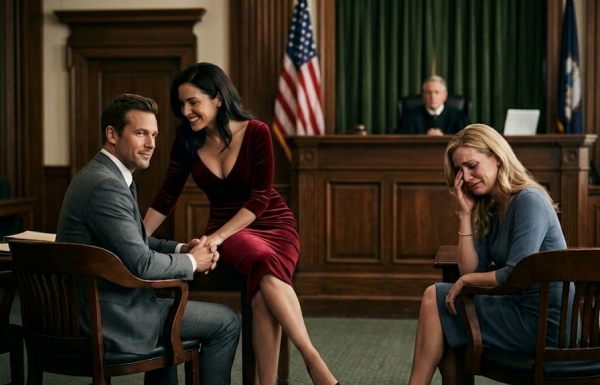
I stood in a Chicago courtroom watching my husband Brandon offer me $50,000 and a 2015 Honda Accord as our divorce settlement while his Instagram model mistress giggled beside him. This is how I turned divorce papers into the trap that destroyed him.
Part 1: The Offer That Was Supposed to Humiliate Me
I stood in a Chicago courtroom watching my husband offer me $50,000 and a 2015 Honda Accord as if he were doing charity work.
His name was Brandon Whitmore, and for nine years, I had been his wife, his bookkeeper, his emotional janitor, and the woman who smiled at investor dinners while he pretended he had built his empire alone. He wore a $6,000 navy suit that morning, Italian loafers, and the expression of a man who believed money could rewrite memory. Beside him sat his girlfriend, Madison Vale, a twenty-four-year-old Instagram model with glossy hair, a diamond bracelet, and the confidence of someone who had never had to read a mortgage statement.
Madison giggled when Brandon’s attorney slid the settlement proposal across the table.
It was not loud. It was worse than loud. It was small, smug, and perfectly timed, like she thought my life had just been reduced to a joke only rich people could understand.
My attorney, Eleanor Price, picked up the document and read it silently. Eleanor was sixty-three, with silver hair, sharp glasses, and the kind of courtroom calm that made arrogant men underestimate her exactly once. She did not react to the offer at first.
That was how I knew it was bad.
Brandon leaned back in his chair and smiled at me. “It’s more than fair, Claire.”
More than fair.
I looked down at the paper.
$50,000 lump sum.
A 2015 Honda Accord with 112,000 miles.
No claim to Whitmore Capital Management.
No claim to future earnings.
No claim to carried interest, investment proceeds, advisory fees, or equity appreciation connected to funds launched during the marriage.
In exchange, I would sign away everything.
The judge was not ruling that day; it was a settlement conference. Still, the room felt heavy with performance. Brandon wanted me to feel small in front of everyone. He wanted Madison to see me lose.
I had been married to Brandon before the private jets, before the downtown office, before the articles calling him a “Midwest dealmaker to watch.” I had known him when he was a Northwestern MBA graduate with $180,000 in student debt, two suits, and a rented one-bedroom apartment in Lincoln Park. I had typed his first investor letters, designed his first pitch deck, and sat beside him at our kitchen table while he practiced raising capital from men who called him “kid.”
Back then, he called me his lucky charm.
Later, when the money came, I became “supportive.”
Then “comfortable.”
Then “not really involved in the business.”
That was the version he needed the world to believe.
The truth was less convenient.
For the first five years of Whitmore Capital, I handled back-office operations while working full-time as a financial compliance analyst. I reviewed vendor contracts, organized investor records, flagged accounting inconsistencies, and once caught a reporting error that could have triggered a regulatory review before the firm even became profitable. Brandon promised me equity “when things stabilized.”
Things stabilized.
Then he destabilized our marriage.
Madison entered our life through a charity event at the Art Institute of Chicago. She was hired to help promote a luxury wellness brand sponsoring the auction. Brandon told me she was “just networking,” which is what men say when they want a woman near them but not named properly.
At first, I blamed stress.
Then late nights.
Then the city.
Chicago winters make people lonely, I told myself. Finance makes men arrogant. Success changes routines.
But then came the receipts.
A $1,900 dinner at Maple & Ash on a night he claimed he was at a board meeting.
A Cartier charge for a bracelet I never saw.
A hotel suite at The Peninsula during a “client weekend” when his entire client list was in Miami.
And finally, a message on his iPad, synced by accident to our home Wi-Fi.
Madison: “Can’t wait until she’s out of the picture.”
Brandon: “Soon. She’ll take the check. She doesn’t understand what any of this is worth.”
That sentence did something to me.
It did not make me scream.
It made me study.
For the next eight weeks, I gathered everything legally available to me as his spouse and as a former operational contributor with access to records he had never bothered to remove. Bank statements. Tax returns. Partnership documents. Fund structures. Emails where he acknowledged my early work. Draft agreements. Internal spreadsheets.
Then I hired Eleanor.
The first thing she said after reviewing my files was, “Your husband is either arrogant, sloppy, or both.”
“He thinks I’m stupid,” I said.
Eleanor looked over her glasses. “That is often more useful than being underestimated by a smart man.”
Now, in that courtroom conference room, Brandon believed the performance was working.
He tapped the settlement offer with one finger. “Claire, we can end this cleanly. You get cash, you get a car, and you don’t have to embarrass yourself pretending you understand private equity.”
Madison covered her mouth like she was hiding another laugh.
I looked at her for the first time.
She was beautiful in a curated way, all contour, lashes, and delicate gold rings. For a second, I wondered if she knew the man beside her had once cried into my lap because no one would return his investor calls. I wondered if she knew I had paid our rent during the year he made almost nothing.
Then I realized it did not matter.
She did not steal a good man.
She received the version he became.
Eleanor placed the settlement offer back on the table.
“My client declines,” she said.
Brandon’s smile faded. “Excuse me?”
“She declines.”
His attorney cleared his throat. “Mrs. Whitmore may want to consider the risks of litigation.”
Eleanor smiled politely. “We are considering them.”
Brandon leaned forward. “Claire, don’t be emotional.”
There it was.
The word men use when they discover a woman has evidence.
I folded my hands on the table. “I’m not emotional, Brandon.”
Madison tilted her head. “Then why drag this out?”
Eleanor turned slowly toward her. “Ms. Vale, unless you have a legal role in this proceeding, I suggest you let the adults continue.”
Madison’s face went pink.
Brandon’s jaw tightened. “Don’t talk to her like that.”
I almost laughed.
He had found protective instincts after all.
Just not for his wife.
The settlement conference ended without agreement. Brandon stormed out, Madison following on heels that clicked against the courthouse floor like tiny applause for bad decisions. I stayed seated for a moment, staring at the rejected offer.
$50,000 and a used Honda.
That was what he thought nine years of my life was worth.
Eleanor closed her folder. “How are you feeling?”
“Humiliated.”
“That will pass.”
“Angry.”
“That can be useful.”
“Ready.”
Eleanor nodded. “Good. Because now we let him keep underestimating you.”
Part 2: The Divorce Papers He Never Read Carefully
People think divorce papers end a marriage.
In my case, they opened a trap.
Not an illegal trap. Not something dramatic from a revenge movie. No fake signatures, no stolen documents, no secret recordings in places where recording would violate the law. Just one carefully drafted clause inside a temporary agreement Brandon signed because he was too arrogant to read anything he thought was beneath him.
The clause was about disclosure.
During the discovery phase, both parties were required to disclose all marital assets, beneficial interests, deferred compensation, fund participation, side agreements, investment vehicles, and any transfers over $10,000 made within the previous three years. Pretty standard language, Eleanor said. But then she added one sentence that mattered.
Any failure to disclose material financial interests could result in sanctions, fee shifting, adverse inference, and reopening of settlement terms.
Brandon signed it.
He signed it while checking his phone.
I watched him do it in Eleanor’s office during a mediated session three weeks after the courtroom insult. His attorney tried to slow him down, but Brandon waved him off.
“It’s boilerplate,” he said.
Eleanor’s face did not move.
Mine almost did.
By then, I knew about the side fund.
Brandon had created an investment vehicle called Lakefront Strategic Partners six months before filing for divorce. On paper, it looked separate from Whitmore Capital. In reality, it was built using relationships, investor lists, and deal flow developed during our marriage.
He had not disclosed it.
He also had not disclosed three advisory agreements, two deferred fee arrangements, and a carried interest structure that could become extremely valuable if a pending healthcare technology acquisition closed before year-end.
The estimated value?
At least $18 million personally to Brandon.
Possibly more.
The gala was connected to that deal.
The Chicago Finance Gala was not just another black-tie charity event. It was the annual gathering where bankers, private equity partners, fund managers, hospital executives, family offices, and political donors gathered beneath chandeliers to congratulate one another for funding “the future of American enterprise.” That year, the headline announcement involved a $1.2 billion healthcare infrastructure consortium.
Brandon was supposed to be one of the celebrated architects.
He had built his entire post-divorce fantasy around it.
Madison had already posted a photo of a silver gown captioned: “Can’t wait to celebrate my king.”
My king.
I nearly choked on my coffee when my sister sent me the screenshot.
My sister, Nora, was less graceful than Eleanor.
“Please let me fight her,” Nora said over the phone.
“No.”
“Verbally?”
“No.”
“Spiritually?”
“Fine.”
Nora had been my emergency contact since the separation. She lived in Oak Park with her wife and two golden retrievers who had more emotional stability than most adults I knew. She was the person who brought groceries when I forgot to eat, wine when I remembered too much, and sarcasm when I needed to stay alive.
“Are you going to the gala?” she asked.
“I wasn’t invited.”
“Since when has that stopped women with good hair and legal documents?”
I laughed for the first time that week.
But then Eleanor called.
“Claire,” she said. “Were you aware that your name remains on the founding advisory roster for the Chicago Finance Foundation?”
I sat up. “What?”
“Apparently, you were listed years ago when Brandon first joined. You have an active invitation.”
“Brandon doesn’t know?”
“He may not have checked.”
Of course he had not checked.
Men like Brandon remembered women when they needed introductions. They forgot them when the photos were taken.
The invitation came two days later.
Black tie.
The Palmer House Hilton.
Reception at six.
Dinner at seven-thirty.
Award presentation and consortium announcement at nine.
I stared at the embossed card for a long time.
Then I called Eleanor.
“I’m going.”
“I assumed.”
“Can we serve documents there?”
“Not theatrically,” she said. “We are not creating a circus.”
“I don’t want a circus.”
“Good. However, there are lawful ways to deliver supplemental disclosure notices and notify relevant parties if financial misrepresentations affect pending investment certifications.”
“Meaning?”
“Meaning Brandon’s failure to disclose financial interests in your divorce may overlap with representations he made to investors and institutional partners.”
I gripped the phone tighter.
“Could that affect the gala announcement?”
“That depends on what he signed.”
Eleanor paused.
Then she said the sentence that changed everything.
“And Claire? He signed a lot.”
For the next month, we worked quietly.
Eleanor coordinated with a forensic accountant named Victor Kim, who looked like a friendly accountant in a cardigan until he started tracing money. Victor found transfers from Whitmore Capital to a consulting entity tied to Lakefront Strategic Partners. He found overlapping administrative costs, deferred fee notes, and internal messages showing Brandon intended to delay disclosure until after the divorce.
One email was especially useful.
Brandon to his CFO: “Keep Lakefront off personal disclosures until after domestic matter closes. No need to complicate.”
Domestic matter.
That was me.
His wife of nine years.
His domestic matter.
Victor printed the email and slid it across the table.
I read it once.
Then again.
My anger became very still.
“What happens now?” I asked.
Eleanor tapped the email. “Now he learns that domestic matters can become institutional concerns.”
We did not leak anything to the press.
We did not post online.
We did not call Madison.
We did not do what Brandon would later accuse me of doing, which was “trying to ruin him.”
We sent formal notices.
To his attorney.
To the court.
To the compliance contacts connected to the consortium.
To the independent directors who were required to review conflicts before the $1.2 billion announcement.
Everything was documented.
Everything was lawful.
Everything was timed.
The gala would not destroy Brandon because I confronted him.
The gala would destroy him because he had built his new life on documents that could not survive the lights.
Part 3: The Woman Who Walked Into the Gala
Six months after Brandon offered me $50,000 and a used Honda, I walked into the Chicago Finance Gala wearing a black velvet gown I bought with my own money.
Not Brandon’s.
Mine.
It was sleeveless, simple, and elegant in a way that did not ask permission. I wore my grandmother’s pearl earrings, red lipstick, and no wedding ring. My hair was pinned back low, and for the first time in months, I recognized the woman in the mirror.
Nora cried when she saw me.
“You look expensive,” she said.
“I am emotionally expensive now.”
“As you should be.”
The Palmer House ballroom was glowing when I arrived. Crystal chandeliers, white tablecloths, gold chairs, champagne trays, and five hundred people who could discuss market volatility while eating tiny crab cakes. Chicago’s financial elite moved through the room in tuxedos and gowns, pretending not to scan name tags for usefulness.
I had spent years attending events like that on Brandon’s arm.
I knew the choreography.
Smile.
Shake hands.
Ask about someone’s fund.
Pretend not to notice when older men looked over your shoulder for someone richer.
That night, no one expected me to arrive alone.
A few people recognized me immediately.
“Claire?” said a woman from an old investor dinner. “I didn’t realize you’d be here.”
“Neither did Brandon,” I said pleasantly.
She blinked, then smiled like she suddenly wanted to hear everything but had been raised too well to ask.
I moved through the room slowly. Not hiding. Not performing. Just existing where Brandon thought I had been erased.
Then I saw him.
He stood near the stage with Madison on his arm.
Brandon wore a black tuxedo and the public smile he used when cameras were nearby. Madison wore the silver gown from her Instagram post, with diamonds at her throat and satisfaction in every inch of her posture. She looked like a woman arriving at her coronation.
Then Brandon saw me.
His smile froze.
Madison followed his gaze.
For one perfect second, neither of them moved.
I did not walk toward them yet. That would have been too easy. Instead, I accepted a glass of sparkling water from a waiter and greeted an old contact from a pension advisory board.
“Claire Whitmore,” he said warmly. “It’s been years. Are you still working in compliance?”
“Yes,” I said. “More than ever.”
Across the room, Brandon whispered something harshly to Madison. She looked annoyed, then nervous. He pulled out his phone, probably texting his attorney.
Too late.
At 7:12 p.m., the first ripple went through the room.
A board member from the Chicago Finance Foundation stepped away from the stage with a phone pressed to his ear. Two executives near the entrance began speaking quietly with event staff. A woman from the consortium’s legal team walked past Brandon without acknowledging him, which was not normal.
Brandon noticed.
I saw it happen.
His confidence shifted into irritation, then concern.
Madison touched his arm. “What’s wrong?”
He shook her off.
At 7:26, Eleanor entered the ballroom.
She wore a navy evening suit and carried a small black clutch that I knew contained nothing but lipstick, reading glasses, and the emotional destruction of poorly prepared men. Victor Kim followed ten steps behind her, looking like he had accidentally wandered into a gala while searching for a tax seminar.
Eleanor found me near the bar.
“You look lovely,” she said.
“You look armed.”
“I am.”
“Is it happening?”
She glanced toward the stage. “It already has.”
Before I could respond, Brandon appeared beside us.
“Claire,” he said, voice tight.
“Brandon.”
He looked at Eleanor. “What did you do?”
Eleanor smiled. “Good evening to you too.”
His jaw clenched. “I just got a call from consortium counsel.”
“That sounds important.”
“They’re delaying the announcement.”
“How unfortunate,” Eleanor said.
He turned to me. “You did this.”
I held his gaze. “No. You signed things you shouldn’t have signed and hid things you were required to disclose.”
Madison appeared behind him, eyes wide. “Brandon, what is she talking about?”
I looked at her, then at the bracelet on her wrist.
Not the same Cartier bracelet from the credit card statement.
A newer one.
Of course.
Brandon lowered his voice. “This is not the place.”
That sentence.
They all say it eventually.
Courtrooms are not the place.
Restaurants are not the place.
Gala ballrooms are not the place.
Apparently, the only acceptable place for consequences is somewhere no one important can see them.
I smiled. “You’re right. The place was discovery. You lied there too.”
His face darkened. “Careful.”
Eleanor stepped forward. “Mr. Whitmore, I strongly advise you not to threaten my client in a room full of witnesses.”
He looked around and realized people were watching.
Not openly.
This crowd was too polished for that.
But champagne conversations had slowed. Heads had turned slightly. The room could smell blood without seeming impolite about it.
A man approached us from the stage area. Richard Callahan, chair of the consortium review committee. He was in his seventies, old Chicago money, with white hair and the expression of someone who considered scandal an inconvenience to scheduling.
“Brandon,” he said. “We need to speak privately.”
Brandon swallowed. “Now?”
“Yes.”
Madison grabbed his arm. “What’s going on?”
Richard looked at her briefly, then dismissed her without speaking.
That was the first time I saw Madison understand that being beside powerful men is not the same as having power.
Brandon turned back to me.
His eyes were furious.
Afraid.
And finally, respectful in the ugliest possible way.
“You couldn’t just take the settlement,” he said.
There it was.
The truth.
Not I’m sorry.
Not I lied.
Not I betrayed you.
Just anger that I had refused the role he wrote for me.
I stepped closer, lowering my voice so only he could hear.
“You offered me $50,000 and a used Honda because you thought I didn’t know what I helped build.”
His mouth tightened.
“I knew, Brandon.”
Then Richard led him away.
Madison stood there, suddenly alone in a room full of people who had no use for her without him. She looked at me with tears gathering in her eyes, though whether from guilt, fear, or embarrassment, I did not know.
“You ruined him,” she whispered.
I shook my head.
“No. I audited him.”
Part 4: The Announcement That Never Happened
The consortium announcement was postponed.
That was the official language.
Postponed pending internal review.
In finance, those four words are not a delay. They are a funeral bell in a tailored suit.
Dinner was served anyway, because rich people will still eat filet mignon during a professional collapse. The orchestra continued playing. Servers poured wine. People spoke in soft tones and pretended the most important story in the room was not happening behind closed doors near the ballroom’s private conference suite.
I sat at Table 18 between a foundation director and a woman who managed a family office in Winnetka.
“Are you related to Brandon Whitmore?” the foundation director asked carefully.
“I used to be married to him.”
The woman from Winnetka took a sip of wine and said, “That must be an interesting past tense tonight.”
I nearly laughed into my salad.
Across the room, Madison sat alone at Brandon’s table, checking her phone every twelve seconds. Her silver gown still sparkled, but the triumph had left her shoulders. Men who had greeted her earlier now avoided eye contact. Women who had been polite to her were suddenly busy with their place cards.
I did not enjoy watching her shrink.
Not exactly.
She had been cruel in court. She had giggled at my humiliation. She had built content around the life Brandon promised her after erasing me.
But she was also twenty-four.
And Brandon had sold her the same fantasy he once sold me: that standing beside him meant standing above everyone else.
At 8:48 p.m., Brandon returned to the ballroom.
He looked ten years older.
His bow tie was slightly crooked. His face had gone pale beneath the warm lights. Richard Callahan walked behind him with two attorneys and the CEO of one of the institutional partners.
Brandon did not return to Madison.
He walked straight to me.
Eleanor, seated one table over, turned slightly in her chair. Victor looked up from his dessert.
Brandon stopped beside my table.
“Claire,” he said quietly.
I looked at him.
For a moment, I saw the younger Brandon. The man at our kitchen table with investor letters spread around cold pizza. The man who used to ask me if his tie looked professional. The man who said, “When this works, it works because of us.”
Then I blinked, and he was gone.
“What do you want?” I asked.
“I need you to withdraw the filing.”
I stared at him.
The audacity had survived even this.
“No.”
His voice dropped lower. “You don’t understand. If this review continues, I could lose the deal.”
“You may lose more than that.”
He flinched.
“I’ll give you more,” he said. “A real settlement. Whatever Eleanor wants. Just stop this before it becomes public.”
I felt nothing then.
That surprised me.
For months, I had imagined this moment would feel like fire. Instead, it felt like the final page of a document I was tired of reading.
“You had six months to tell the truth,” I said.
“I was trying to protect the firm.”
“No. You were trying to protect your share.”
He looked down.
I leaned back slightly. “Do you remember what you said in court?”
His jaw tightened.
“You told me not to embarrass myself pretending I understood private equity.”
“Claire—”
“I understood enough.”
He closed his eyes.
Around us, the ballroom had gone quiet in the subtle way that means everyone is listening while pretending to discuss dessert.
Brandon opened his eyes again. “Please.”
That word almost did what all his arrogance could not.
Almost.
Because once, I loved him.
Once, his fear would have become my responsibility.
Once, I would have managed the fallout, softened the truth, cleaned the spill, and called it partnership.
But I was not his wife anymore in any way that mattered.
“No,” I said.
He stared at me, and I watched the last of his control leave his face.
Behind him, Madison approached.
“Brandon,” she said, voice trembling. “What’s happening? People are saying the deal is frozen.”
He turned on her with sudden irritation. “Not now.”
She recoiled.
I saw her understand something else then: a man who humiliates one woman will eventually humiliate the next.
The gala chair stepped onto the stage at nine.
The room quieted.
“Ladies and gentlemen,” he said, smiling with the rigid determination of a man walking across thin ice, “due to ongoing review processes among several institutional partners, tonight’s consortium announcement will be rescheduled. We appreciate your discretion and continued commitment to the future of responsible finance.”
Responsible finance.
Nora later told me she wished she had been there just to hear those words land on Brandon like a safe.
No one clapped at first.
Then there was polite applause, awkward and thin.
The $1.2 billion announcement never happened that night.
By morning, three financial newsletters had reported the delay. By noon, anonymous sources were discussing disclosure concerns. By the end of the week, Brandon had stepped down temporarily from Whitmore Capital’s leadership pending internal review.
Temporarily became permanently.
The side fund unraveled first.
Investors hate many things, but uncertainty and hidden conflicts sit near the top of the list. The consortium partners withdrew pending review. One institutional investor demanded clarification. Another froze commitments. The healthcare acquisition moved forward without Brandon.
He did not go bankrupt.
That would make the story too simple.
Men like Brandon rarely lose everything in one clean dramatic collapse. They lose reputation first. Then leverage. Then allies. Then the ability to walk into a room and assume everyone is grateful.
In the divorce case, the consequences were more direct.
The court did not appreciate hidden assets.
Neither did Eleanor.
The settlement changed dramatically.
I received a fair share of marital assets, reimbursement for legal fees connected to disclosure violations, a percentage tied to certain marital-era interests, and enough financial security to rebuild without begging anyone for permission. The Honda was not part of the final agreement.
I bought myself a new car.
A blue Volvo.
Nora named it “The Audit.”
Part 5: What I Built After the Trap Closed
The divorce was finalized in late spring.
Chicago was just beginning to thaw, the lake still steel-gray, the trees along Lincoln Park showing small green promises. I walked out of the courthouse alone, holding a folder that ended my marriage and began the rest of my life. No photographers. No dramatic soundtrack. Just me, my attorney, and a wind strong enough to mess up the hair I had paid good money to have blown out.
Eleanor stood beside me on the courthouse steps.
“You did well,” she said.
“I feel tired.”
“That is often what winning actually feels like.”
I looked at the traffic moving along the street.
“Did I destroy him?”
Eleanor considered the question.
“No,” she said. “You stopped participating in his protection.”
That stayed with me.
Because she was right.
For years, I had protected Brandon.
I protected his image when he interrupted me at dinners.
I protected his ego when people praised him for work I had quietly supported.
I protected his ambition when he forgot anniversaries, dismissed my career, and treated loyalty like a renewable resource he could drain without cost.
Then, finally, I stopped.
The world called it a trap because the fall was dramatic.
But the truth is, Brandon built the trap himself.
He built it with every hidden transfer.
Every undisclosed interest.
Every arrogant assumption that I would take scraps and disappear.
All I did was read the papers carefully enough to find the door.
Madison left him two months after the gala.
Not publicly. Not dramatically. One day her photos with him disappeared from Instagram, replaced by beach pictures, motivational quotes, and a caption about “outgrowing toxic energy.” Nora sent it to me with three laughing emojis and one legal disclaimer she invented herself.
I did not respond.
Madison had been part of my humiliation, but she was not the center of my future.
Brandon tried to contact me several times after the divorce.
At first, through attorneys.
Then through mutual friends.
Finally, one evening, from an unknown number.
“I know you probably won’t answer,” his voicemail began. “But I need to say this. I was cruel. I thought money made me smarter than you. I thought because I was the face of the firm, you didn’t matter. I was wrong.”
I listened once.
Then I deleted it.
Not because I needed to hate him.
Because I no longer needed to archive his remorse.
That summer, I started my own consulting practice.
Compliance strategy for small investment firms.
It began with one client, then three, then enough work that Nora said I needed to stop answering emails at midnight like a divorced raccoon. I rented a small office in River North with exposed brick, big windows, and a coffee machine that sounded like it was preparing for war.
I framed nothing from my marriage.
Not the old investor letters.
Not the gala invitation.
Not the divorce decree.
But I did keep one thing.
A copy of Brandon’s original settlement offer.
$50,000 and a 2015 Honda Accord.
I kept it in a drawer, not because I wanted to stay angry, but because sometimes women need a reminder of what people think they are worth before they decide for themselves.
One year after the gala, I was invited back.
Not as Brandon’s wife.
Not as a founding spouse.
As a panelist.
The topic was governance, disclosure, and ethical risk in emerging funds.
Eleanor laughed for a full minute when I told her.
“Please wear black,” she said.
“I was thinking red.”
“Even better.”
The ballroom looked different the second time.
Or maybe I did.
The chandeliers were the same. The champagne trays were the same. The men in tuxedos still laughed too loudly at jokes that were not that funny. But I did not feel like an accessory anymore.
I felt like a warning with good posture.
After the panel, a young woman approached me. She wore a simple black dress and carried a notebook filled with questions. She said she worked operations for a startup fund and wanted advice on how to make partners take compliance seriously.
I smiled.
“Document everything,” I said.
She laughed, thinking I was joking.
I was not.
Later that night, I saw Brandon across the room.
He looked older, humbler, and less polished around the edges. He was speaking with two men near the bar, no Madison, no entourage, no crowd orbiting him like he was the sun. When he saw me, he nodded once.
I nodded back.
That was all.
No confrontation.
No apology.
No unfinished scene.
Just two people who had once built something together and then watched truth decide who got to keep standing.
I left before dessert.
Outside, Chicago was alive with cold air and streetlights. A line of taxis waited near the curb. The river reflected the city in broken gold pieces. I stood there for a moment, breathing in the night that no longer belonged to him.
My phone buzzed.
Nora.
“Did you slay?”
I typed back, “Professionally.”
She replied, “Acceptable.”
I laughed and climbed into my blue Volvo.
The Audit started smoothly.
As I drove north along Lake Shore Drive, the skyline glittering to my left and Lake Michigan stretching dark to my right, I thought about the woman I had been in that courtroom. Sitting across from a husband who thought $50,000 and a used car were enough to buy my silence. Watching his mistress giggle while my life was reduced to a bad offer.
I wish I could go back and tell that woman one thing.
Not that revenge was coming.
Not that Brandon would fall.
Not that a gala full of elites would one day watch him lose the room he had spent years trying to own.
I would tell her this:
The insult is not the end of the story.
Sometimes it is the invoice.
And if you keep your hands steady, read every line, and refuse to confuse humiliation with defeat, one day the people who undervalued you may discover they were the ones who signed too cheaply.
Brandon gave me $50,000 and a used Honda in his imagination.
In reality, he gave me evidence.
He gave me motive.
He gave me a reason to stop protecting him.
And six months later, when I walked into that $1.2 billion Chicago gala, I did not destroy him.
I simply arrived with the truth.
Everything else collapsed under its own weight.
